Trump administration withholds $40M in federal transportation funds from California over trucker English rules
The Trump administration has withheld $40,685,225 in federal transportation funds from California after finding the state failed to enforce English Language Proficiency rules for commercial truck drivers, a move federal officials say is aimed at improving highway safety.
- Amount withheld: $40,685,225 in Motor Carrier Safety Assistance Program (MCSAP) funds.
- Reason: Federal officials say California is the only state not enforcing commercial driver English Language Proficiency (ELP) requirements.
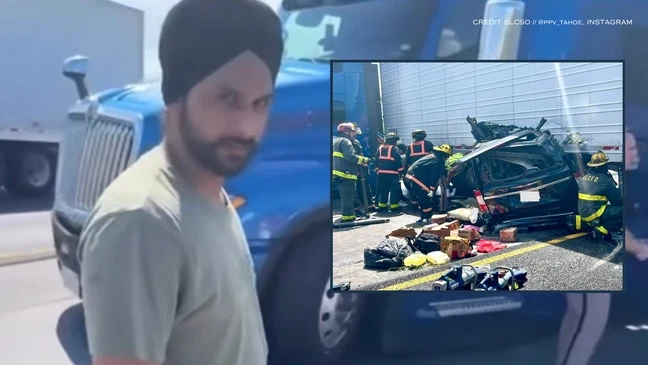
- Trigger: The decision follows a federal enforcement review and a referenced fatal crash tied to a driver who allegedly failed an ELP test.
- Fix required: California must adopt and enforce rules compatible with the federal ELP standard to regain funds.
Why federal officials acted
Federal authorities say this decision centers on roadway safety. The U.S. Department of Transportation, via the Federal Motor Carrier Safety Administration (FMCSA), concluded California had not adopted or enforced rules compatible with the federal English Language Proficiency standard for commercial drivers. Federal law requires drivers to read and speak English well enough to interact with law enforcement, understand road signs, and complete required reports. See the USDOT briefing for the department statement.
What the federal review found
FMCSA’s review examined roadside inspections and enforcement of out-of-service orders for drivers who fail ELP tests. Between June 25, 2025, and August 21, 2025, FMCSA data show roughly 34,000 roadside inspections recorded at least one violation; during that period, only one inspection in California led to a driver being placed out of service for ELP-related reasons. By contrast, multiple other states recorded and enforced ELP violations. Reporting summarizing these findings is available in industry coverage such as CDLLife.
The agency also found at least 23 drivers who had ELP-related out-of-service orders issued in other states were later allowed to operate in California, meaning California did not honor those out-of-service findings or adopt compatible statutes, rules or enforcement practices required by federal standards.
The enforcement timeline and executive order
In June 2025, President Trump signed an executive order restoring focus on English proficiency enforcement for commercial drivers, reversing 2016 guidance that deprioritized such enforcement. After warnings to several states, the FMCSA gave California a 30‑day window to come into compliance; when state officials did not meet the deadline, USDOT announced it would withhold $40,685,225 in MCSAP funds. See CDLLife and the USDOT briefing for related notices.
California’s response so far
California officials, including Governor Gavin Newsom’s office, have not announced new legislation or enforcement procedures that satisfy the federal ELP compatibility test as of the latest federal notice. USDOT statements accuse the governor of refusing to enforce the federal standard. State agencies such as the California Department of Motor Vehicles have been in discussions with federal counterparts, but no public timetable for changes has been released.
Funding at stake and how it is used
The withheld MCSAP funds are federal dollars that flow to state highway patrols and enforcement programs. These funds support:
- Roadside inspections
- Traffic enforcement operations
- Safety audits of trucking companies
- Public education campaigns to reduce crashes and improve commercial vehicle safety
Federal officials emphasize the vital nature of the withheld $40.7 million for sustaining these programs in California. See the USDOT briefing for program details.
Link to crash and gaps in public reporting
USDOT ties the enforcement effort to a fatal truck crash involving a driver who allegedly failed to demonstrate English proficiency yet received a commercial driver’s license. Federal officials cite that crash as a primary reason for re‑prioritizing ELP enforcement. However, publicly available news reports and federal materials shared so far do not include detailed, independently verified information about the crash (date, location, victims’ identities or final investigative findings). Journalists requesting more specifics from USDOT and California agencies have not received additional public documentation as of the latest release. See the Bloomberg Government report and the USDOT briefing.
What California must do to regain funds
USDOT states the path to restoring the withheld funds is straightforward: California must “adopt and actively enforce a law, regulation, standard, or order that is compatible with the federal ELP requirement for commercial drivers.” Practically, that requires:
- Conducting English assessments during inspections
- Placing noncompliant drivers out of service
- Creating rules to recognize and enforce out-of-service orders issued by other states
Industry reporting on these compliance steps is available from CDLLife.
Reactions from transportation and safety groups
Mixed responses emerged from industry and advocacy groups. Some trucking and safety advocates say enforcing the ELP standard could improve road safety by ensuring drivers can follow directions and communicate during incidents. Others question how testing is administered and whether language testing alone addresses broader training and safety needs. California labor and immigrant-rights groups have warned against policies that could unfairly target non-English speakers without accessible paths to training and testing. See Bloomberg Government and CDLLife for commentary and reporting.
Implications for The Imperial Valley, California
Economic impact
The Imperial Valley depends on trucking for agricultural exports, food distribution and cross-border commerce. With $40.7 million withheld, state-led roadside inspection programs and safety audits could see reduced staffing and fewer inspections, potentially slowing responses to unsafe carriers and reducing highway-patrol presence on key freight corridors that link Imperial County to border crossings and interstate highways.
Public safety and road users
Residents share the highways used by commercial freight. Federal officials argue stronger enforcement will improve communication during traffic stops and crash investigations, potentially reducing risks in incidents like the one cited by USDOT. If California adjusts enforcement to meet federal standards, communities could see more consistent inspections on routes that serve agricultural transport and cross‑border traffic.
Political, social and workforce effects
The dispute highlights tensions between federal and state authority. Locally, the fight could become a campaign issue in the Imperial Valley, influencing debates on border policy, labor and transportation safety. Many truck drivers in and around the valley are part of immigrant communities; policies focusing on English proficiency without accessible testing and training could disrupt the local workforce. Employers and workforce programs may need to expand training so drivers can meet requirements without losing jobs.
Practical applications for residents
For drivers, fleet operators and commuters in the Imperial Valley, the dispute could mean:
- Potentially more roadside inspections if California changes enforcement
- Short-term reduction in state-funded safety campaigns while funding is withheld
- Local law enforcement seeking clarity about inspection authority and whether federal agencies will assist
Residents traveling freight corridors should expect increased scrutiny at inspection points if California moves to comply with federal ELP rules.
Sources and further reading
- U.S. Department of Transportation briefing: “Trump’s Transportation Secretary Sean P. Duffy Announces Consequences for California’s Failure to Enforce Commercial Driver English Proficiency Requirements”
- Bloomberg Government coverage: “Trump threatens $40 million for California over trucker licenses”
- CDLLife reporting: “USDOT to withhold $40 million from California for failure to enforce English rules for truck drivers”
“California is the only state in the nation that refuses to ensure big rig drivers can read our road signs and communicate with law enforcement. This is a fundamental safety issue that impacts you and your family on America’s road,” Transportation Secretary Sean P. Duffy said in the USDOT statement.