Humanoid robot Bebop’s oversized battery delays Southwest flight out of Oakland, spotlighting lithium battery airline rules
A Southwest Airlines flight from Oakland to San Diego was delayed over an hour on April 30, 2026, after handlers had a humanoid robot named Bebop’s oversized lithium battery confiscated, spotlighting strict TSA guidance and FAA rules.
Key takeaways
- Flight 1568 delayed: Southwest’s Oakland to San Diego flight was held about one hour after Bebop’s battery exceeded allowable limits.
- Battery rules enforced: Purchasing a seat for an inanimate device does not waive lithium-battery restrictions; crews required removal and confiscation procedures.
- Local impact: Event companies and travelers should pre-check battery specs and shipping options to avoid delays and additional costs.
Main story
Key information
- Flight: Southwest Airlines Flight 1568, Oakland (OAK) to San Diego (SAN) — source: Fox News.
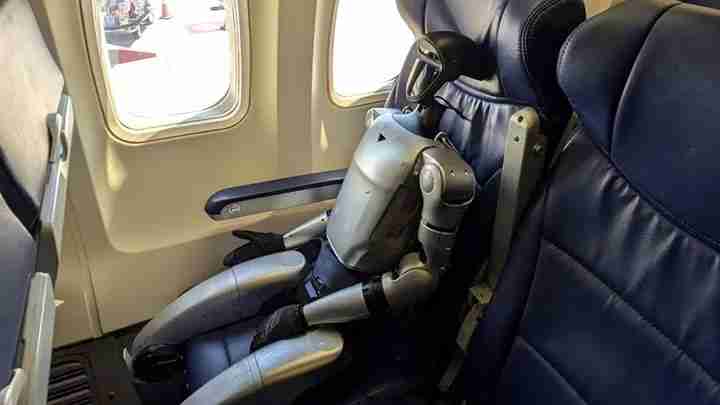
- Device: Bebop, a 4-foot-tall humanoid robot owned by Elite Event Robotics (Dallas, Texas), roughly 70–75 pounds depending on reports — sources: Fox News; WSVN.
- Cause of delay: Bebop’s lithium battery exceeded airline limits and had to be removed before departure — airline statement via Fox News.
- Delay length: ~one hour; some passengers missed connections and incurred extra costs — reported by NDTV.
- Regulatory context: TSA guidance and FAA rules limit lithium batteries because of fire risk.
What happened at Oakland Airport
Elite Event Robotics brought Bebop to Oakland for a paid appearance. According to company staff, the robot danced at the gate and drew a crowd of travelers and children who filmed and gave it high-fives. Video of the preboarding scene circulated online (YouTube video of gate scene; YouTube short of Bebop at the gate).
At the gate, handlers discovered the robot plus its transport case exceeded Southwest’s 100-pound carry-on limit. As a workaround, the team purchased an extra seat and registered Bebop as an inanimate object — a practice used when oversized items are carried as cabin items and a separate ticket is bought (Fox News).
After boarding, flight attendants flagged the robot’s lithium battery as too large under airline rules. Handlers removed the battery at the airline’s request; Southwest processed the battery under its confiscation procedures and the aircraft departed roughly one hour late. Handlers interviewed by reporters identified themselves (one as Eily/Chana Ben‑Abraham) and described the sequence of events (WSVN; Fox News).
Why batteries matter: airline and TSA rules
Lithium batteries pose a fire risk; federal and airline rules limit their size, quantity, and where they can be stowed. Generally, airlines require larger lithium cells to be carried in the cabin rather than checked, with watt-hour caps for larger batteries, and spare batteries are commonly banned from checked luggage. These restrictions aim to reduce the risk of an in-flight fire that is difficult to control — see TSA guidance.
Southwest’s response: The airline confirmed a customer purchased a seat for a device but that the device’s battery was too large to meet safety rules and praised the crew’s professionalism: “Nothing is more important to Southwest than the safety of our customers and employees” (statement reported by Fox News).
Responses from the company and passengers
Elite Event Robotics posted about the delay on social media with a light tone — calling the situation “Delayed but worth the wait” and saying Bebop remained the “main attraction.” The company noted the robot had flown earlier from Dallas to Oakland without incident (Fox News).
Handlers faced urgent logistics: Bebop was booked to appear in Chicago that weekend. Ben‑Abraham said the company arranged a replacement battery via family members who drove more than five hours and shipped a battery overnight so Bebop could perform at the next event (WSVN).
Some passengers were angered: reports say a passenger incurred about $400 extra and a two-hour wait to continue travel, while social replies ranged from delight at the novelty to frustration that an object occupied a seat and disrupted schedules (NDTV).
“That’s not a passenger, that’s freight,” wrote one social media user — reflecting a commonly held view that oversized devices should comply with freight rules rather than occupy passenger seats.
Timeline and verification of events
- Earlier leg: Bebop flew from Dallas to Oakland earlier the same day without reported problems (Fox News).
- Gate: Robot danced; crowd gathered; handlers purchased an extra seat when case + robot exceeded carry-on limits (YouTube video of gate scene).
- Boarding and delay: Battery flagged by crew; battery removed and processed; flight departed ~one hour late (Fox News; WSVN).
- Aftermath: Company arranged battery transport to Chicago; social posts thanked passengers for patience.
Implications for The Imperial Valley, California
Economic impact
- Tourism and events: Novel attractions like humanoid robots can draw crowds, but organizers should budget for logistics if batteries or transport cases push items over airline limits.
- Small business costs: Local rental companies and planners may face higher fees or last-minute shipping if batteries must be sent separately, affecting margins.
Political consequences
- Local policy: Officials could be asked to clarify permitting for unusual attractions and address constituent concerns when travel disruptions occur.
- Public safety oversight: The incident reinforces support for strict battery safety rules that local leaders may cite in event regulations.
Social effects & cultural relevance
The robot’s viral moment presents an opportunity for STEM outreach in the Valley — schools and libraries can use the story to teach engineering and safety. At the same time, residents who value reliability may expect event organizers to clearly communicate logistics to avoid frustration.
Practical applications for residents
- Event planners: Confirm battery specifications well in advance; arrange compliant shipping or ground transport when possible.
- Travelers: Review TSA guidance and airline policies; an extra seat does not bypass battery restrictions.
- Schools & organizers: Prepare contingencies for headline attractions and consider local sourcing for high-tech acts.
Regulatory and safety takeaway
Bottom line: Airline safety rules for lithium batteries are strict and enforced: purchasing a seat for an inanimate object does not exempt it from hazardous-material regulations. Plan packaging, shipment, and backup logistics well ahead to avoid delays and extra costs.
Sources
- Fox News Digital: “Airline flight delayed for a bizarre reason”
- NDTV: “Humanoid robot travelling for work delays Southwest flight for over an hour in California”
- WSVN: “Meet Bebop: Humanoid robot causes Southwest flight delay out of Oakland Airport”
- YouTube video of gate scene
- YouTube short of Bebop at the gate
- TSA guidance on lithium batteries
Reporting contributed by Times Media Service; primary local coverage and interviews referenced above.