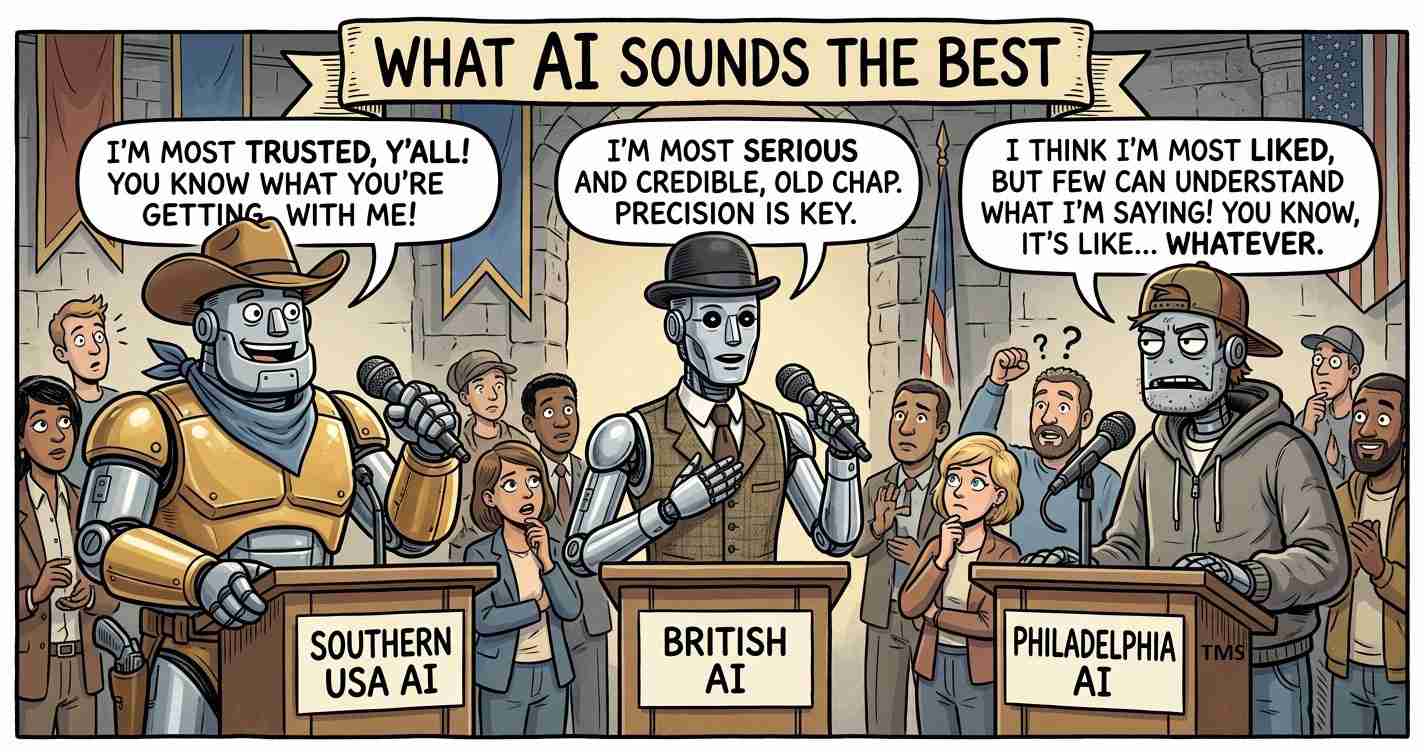
Survey of 3,023 users finds people prefer warm, human-sounding AI — Southern accent tops the list
A survey of 3,023 users by The Word Finder finds people overwhelmingly prefer warm, human-sounding AI voices with regional character; the Southern accent topped the list, conveying calm authority and trusted companionship instead of robotic neutrality.
Key takeaways
- Sample: 3,023 users surveyed by The Word Finder.
- Top pick: Southern accent — described as gentle, reassuring and carrying “calm authority.”
- Preferences: 73% want one consistent accent in tech; 75% prefer human-sounding AI; only 2% want their voice cloned.
- Trust and use: Southern voices rated most trusted and nearly tied with British accents for sounding smartest; Midwestern/neutral American voices lead trust for serious topics like finance.
Voice with character, not a robot
The The Word Finder AI voice survey shows many users are done with the monotone, keypad-sounding assistants of early voice tech. Respondents favor voices that sound like actual humans — voices with warmth, quirks and a hint of theatre. The Southern accent repeatedly appeared as the archetype of a calm friend or kindly librarian — imagine a soft drawl delivering practical advice with easy authority.
Other accents and associations
Respondents associated specific accents with particular traits:
- New York City: confidence and efficiency — a brisk, no-nonsense helper.
- BBC English: trust and intelligence, like authoritative newsreaders.
- New England: blunt charm and realism.
- SoCal/Valley: relaxed, friendly tones.
- Texas drawl: storytelling confidence — makes even mundane details feel like tall tales.
Regional spice and variety
The survey flagged a broad range of regional personalities respondents liked in technology:
- New Jersey: feisty directness.
- Philadelphia: gritty warmth.
- Chicago: dependable bluntness.
- Louisiana: soulful flair.
These choices suggest “humanized” AI is not one size fits all — users imagine assistants with local flavor that match cultural expectations.
Trust, smarts and the neutral middle
Follow-up findings add nuance. Southern voices were rated most trusted and nearly tied with British accents for sounding the smartest. Yet for heavy-duty topics like finance, Midwestern (neutral American) accents led in perceived trust — a reminder that neutrality still plays a practical role when users want seriousness and clarity.
What people want — and don’t want
Key preference stats:
- 73% want one consistent accent in tech experiences.
- 75% prefer human-sounding AI over synthetic-sounding speech.
- Only 2% want their own voice cloned for devices.
Those numbers suggest users want connection without creepiness: consistent, humanlike AI voices that feel reliable and approachable.
Founder perspective
“Voice shapes our emotional connection to technology — it’s the difference between a tool and a trusted companion,” said Praveen Latchamsetty, founder of The Word Finder.
That perspective helps explain why listeners respond to personality in a voice the way they do to body language in people: it sets context, conveys trust and colors every interaction.
Implications for the Imperial Valley
Local stakeholders in the Imperial Valley could harness regionally tuned AI voices to better serve residents and visitors. Possible impacts include:
Economic impact
Local businesses — call centers, tourism lines, ag-tech interfaces — could adopt warm, human-sounding voices to make services feel familiar, increase caller engagement and improve customer satisfaction, helping small businesses compete.
Political consequences
Elected officials and campaign operations that choose tones matching local tastes may gain an edge: a friendly SoCal cadence could elicit different reactions than a formal BBC-style delivery in voter outreach and town halls.
Social effects
In tight-knit communities across Imperial County, approachable AI voices may boost adoption among older residents who prefer comforting, human speech over clinical tones, improving access to telemedicine and benefits enrollment.
Cultural relevance
Imperial Valley’s mix of rural, Latino and transborder communities favors voices that feel warm and local. Regional accents or bilingual, humanlike AI could better reflect local identity and strengthen community trust.
Practical applications
Utilities, county helplines and ag-tech tools can reduce confusion by adopting clear, consistent, human-sounding voices — especially for urgent messages about water, power or weather alerts.
Conclusion
As AI becomes more integrated into daily life, how it sounds may matter as much as what it says. Voice is not merely a feature — it shapes trust, warmth and personality in every interaction. (Source: The Word Finder)