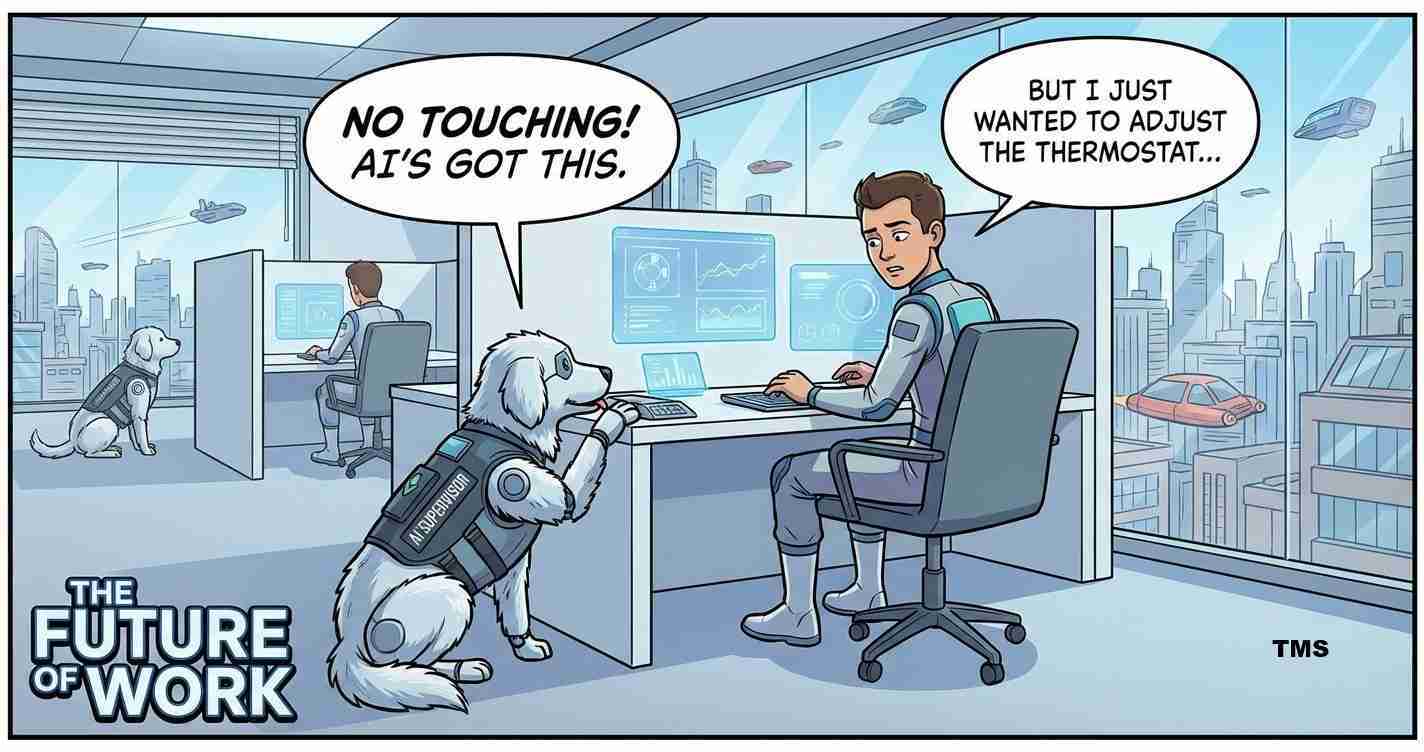
No, AI won’t ruin your life — it might even give you a 4‑day workweek. But Andrew Yang warns tens of millions could lose jobs
Andrew Yang warns that AI could eliminate 30–40 million U.S. jobs within a decade, threatening retail, logistics and white‑collar roles; he urges Universal Basic Income and other policies to avert widespread economic and social upheaval.
- Magnitude: Yang estimates roughly 30–40 million U.S. jobs could be automated in the next decade based on his 44%/half-of-that framework (Business Insider, Yang’s blog, interviews).
- At‑risk sectors: Retail, call centers, fast food, insurance, accounting, trucking, logistics and some white‑collar roles are highlighted as vulnerable.
- Policy push: Yang advocates a $1,000/month Universal Basic Income funded by AI‑compute or “token” taxes, plus retraining and community investments.
Yang’s warning: scale, sectors and evidence
Claim and math: Yang repeats a core claim that about 44% of U.S. jobs involve repetitive manual or cognitive tasks and that roughly half of those could be automated in the next decade — which he calculates as roughly 30–40 million jobs. He has made similar forecasts since his 2020 campaign, when he warned that self‑driving trucks could displace one million drivers and destabilize communities.
Signs today: Yang points to corporate moves and labor trends: a smaller U.S. labor force since 2020, reported time‑savings from AI (examples of tasks cut from eight hours to ~40 minutes), firm investments in automation, and layoffs where companies plan to use AI tools in place of hiring. (Reporting and analysis: Business Insider; Yang’s blog; select interviews: video example).
Studies and counterpoints
Research and industry forecasts vary. Some indices and reports (MIT, IMF, McKinsey) find many tasks are susceptible to automation; other firms (for example, Goldman Sachs) predict smaller or more transitory displacement. Yang characterizes moderate forecasts as optimistic, arguing market incentives could accelerate automation faster than policy or communities can adapt. (Summaries in Business Insider.)
How work is changing now
Automation extends beyond factories. Yang stresses next‑wave impacts in retail, call centers, fast food, insurance, accounting, consulting and content production as firms use AI to write reports, handle customer service, and streamline processes. Companies across sectors are experimenting with and scaling AI tools to replace human labor in predictable tasks. (Sources: Business Insider; Yang’s blog.)
Potential upside: shorter workweeks and productivity
Not all change is loss. Higher productivity could yield shorter workweeks and more leisure if gains are shared. Yang notes anecdotes of dramatic task time reductions, opening the possibility of a four‑day workweek. However, current evidence shows layoffs and productivity gains being captured by firms rather than broadly shared; policy choices will determine whether workers benefit.
Policy response: UBI and beyond
Yang’s proposal: a Universal Basic Income of $1,000 per month for each adult, funded by taxes on AI compute or a “token tax” on firms profiting from public data and labor. He frames UBI as a baseline while other supports — job retraining, community programs, and civic investment — address purpose and belonging. Critics warn of cost and debate whether UBI is the best tool. (Source: Yang’s blog; reporting: Business Insider.)
Uncertainties and open questions
Key unknowns remain: how many jobs AI will truly eliminate versus create, the speed of automation adoption, and which regions will be hit hardest. Labor‑force shrinkage since 2020 reflects many causes — early retirements, family choices, migration — with AI as one factor. Yang rejects doomsday total‑unemployment claims but says tens of millions displaced would be devastating.
Implications for The Imperial Valley, California
Economic impact
Agriculture and packing: The Imperial Valley depends on farming, packing and seasonal labor. AI‑driven automation in sorting, packing and logistics could reduce demand for some manual jobs, though many tasks remain hard to automate today. If automation lowers costs for farm owners, seasonal hiring patterns may change. (Context and sector warnings: Business Insider.)
Trucking and logistics: Located on trade routes to Arizona and Mexico, the Valley could see effects from self‑driving trucks and logistics AI — reducing shifts or hours for drivers and warehouse workers. (Yang’s trucking warnings: Yang’s blog.)
Retail and services: Local retail, fast food and call‑center roles are listed by Yang as high‑risk; small stores or restaurants may adopt automated checkout or ordering systems, altering hiring in towns such as El Centro and Calexico. (Reporting: Business Insider.)
Political consequences
Local leaders could face pressure to choose between public supports, targeted retraining, or incentives to attract new businesses. Debates over UBI, AI taxes, local revenues and state aid could become political flashpoints in Imperial County. (Yang proposals: Yang’s blog.)
Social effects
Many households rely on seasonal wages and multiple jobs; cuts to hours or roles could strain incomes and increase demand for services. Yang emphasizes that cash helps but that purpose and community matter — local groups and churches may play important roles in adaptation. (Interview examples: televised interview.)
Cultural relevance
Cross‑border labor ties mean automation that reduces low‑skill jobs could shift migration and commuting patterns, altering family dynamics and local culture tied to seasonal work. Policy approaches like UBI would need to consider these cross‑border realities. (Regional context and Yang’s notes: Yang’s blog.)
Practical applications for residents
Actions local leaders and residents can consider:
- Training and broadband: Expand short courses at Imperial Valley College and workforce programs on AI tools, truck maintenance for automation, and tech support; close rural broadband gaps so residents can access remote AI‑enabled jobs. (Reporting: Business Insider.)
- Local planning: County planners and chambers should map which agriculture, logistics, retail and healthcare roles are most at risk and design targeted retraining and employer partnerships; pilot four‑day workweek trials where feasible to test sharing productivity gains. (Policy options and Yang’s four‑day suggestion: Yang’s blog.)
Sources and reporting notes
This article draws on interviews and reporting about Andrew Yang’s views and broader research on AI and labor. Key sources include Business Insider’s December 2025 coverage, Yang’s policy blog “The Future of Work”, and televised interviews (examples: interview 1 and interview 2).
Note: All facts, figures and URLs from the original reporting have been preserved above; readers can follow the linked sources for full context and primary quotes.
“Cash alone won’t fix the social harms — people also need purpose and community,” Yang emphasizes, urging both financial supports and civic investments to help communities adapt.