Newsom’s high-speed rail humiliation deepens as transport chief admits errors; full line now pegged at $126 billion and mocked as “Stonehenge”
California’s high-speed rail project, once billed at $33 billion, now is estimated at roughly $126 billion with no operational trains outside a Central Valley stretch; officials admit errors amid a roughly $90 billion funding gap and mounting federal scrutiny.
Key takeaways
- Original 2008 estimate: Proposition 1A listed the Los Angeles–San Francisco line at about $33 billion.
- Current full-system estimate: roughly $126 billion, with an estimated $90 billion funding shortfall.
- Visible progress limited: construction largely confined to the Merced–Bakersfield Central Valley corridor; no trains operating as of early 2026.
- Political and local fallout: officials admit mistakes; critics mock unfinished structures as “Stonehenge” and call the program an example of government waste.
Timeline and rising costs
The California High-Speed Rail Project began as a promise to cut travel time between Los Angeles and San Francisco to under three hours. Voters approved Proposition 1A in 2008 with a roughly $33 billion price tag for the full line.
Nearly two decades later the latest full-system estimate sits near $126 billion, a figure that dwarfs early expectations and has become a focal point for critics. Progress has been limited: the only sustained construction activity is the Central Valley segment between Merced and Bakersfield, and as of early 2026 no trains operate anywhere on the planned high-speed network.
Federal oversight and reporting have highlighted years of delays, cost growth and missed milestones — see the U.S. Senate Commerce Committee summary for an extensive review of the program’s history and federal concerns.
Official admissions and shifting strategy
California Transportation Secretary Toks Omishakin has acknowledged mistakes, calling some criticism “very fair.” He told reporters that neither voters nor officials fully understood what it would take to finish the system, while also expressing confidence the state can secure remaining funding. See remarks available.
“we can get those funds to get the … project done” — Transportation Secretary Toks Omishakin (remarks)
Governor Gavin Newsom publicly scaled back the project in 2019, conceding there was “simply isn’t a path from San Francisco to LA” under the original plan and shifting focus to the Central Valley segment. The administration’s stance has shifted from expansion to damage control, including legal fights and federal negotiations — see California Globe background and commentary and the U.S. Department of Transportation briefing/op-ed.
Federal funding and political fallout
Federal support that once helped propel the project has been reduced. Officials and federal leaders have publicly criticized the program for spending taxpayer dollars without delivering a finished line. The federal government has provided billions over many years while trains have yet to carry passengers — documented in the Senate Commerce coverage.
In 2025 a significant federal funding tranche was rescinded after the project missed milestones tied to a projected 2033 opening for the Merced–Bakersfield section. California later dropped a legal challenge to that rescission while criticizing the federal response, underscoring a strained partnership between state and federal officials.
Public criticism and the “Stonehenge” image
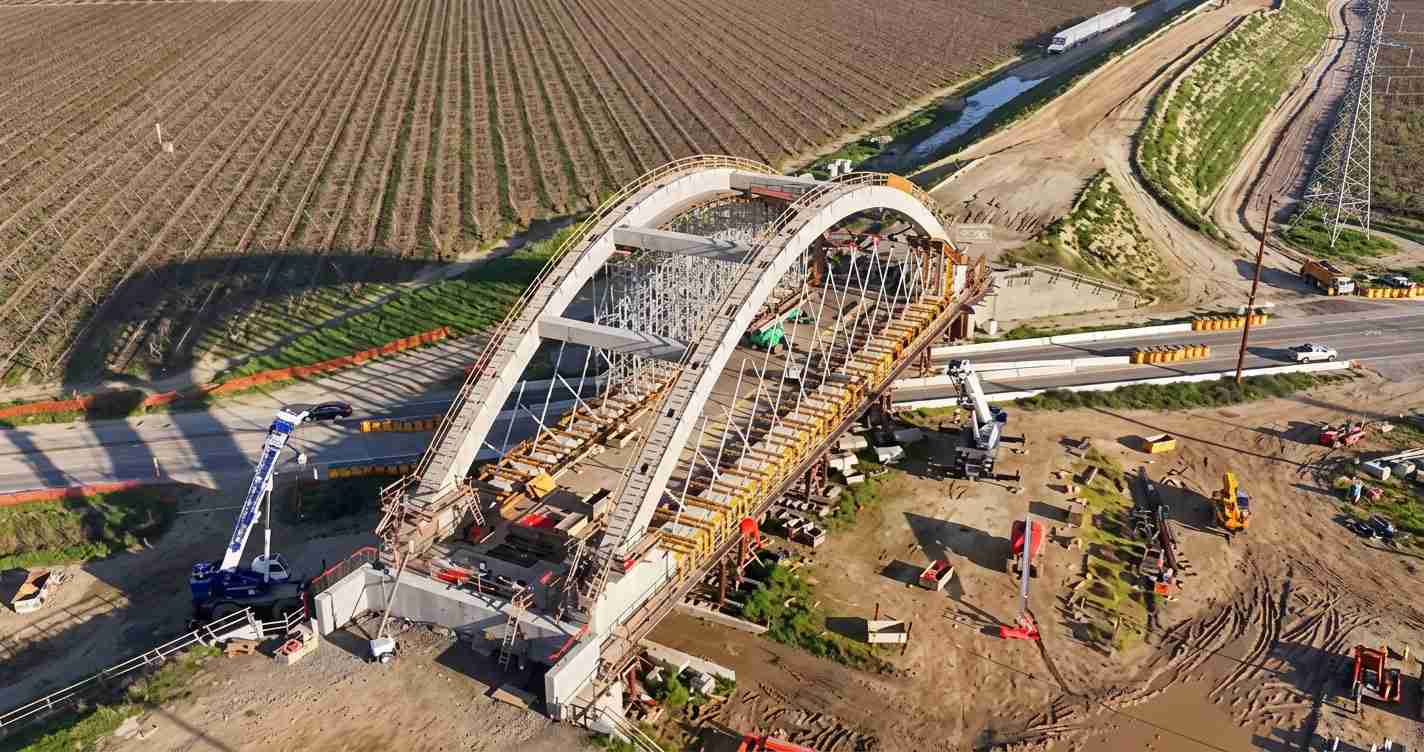
Elevated concrete viaducts and incomplete structures in Fresno and other Central Valley communities have drawn ridicule — locals and visitors have nicknamed some visible work “Stonehenge”. Critics argue the project has become a costly, unfinished monument rather than a functioning transportation system, a line of attack amplified on social media and in political debate.
Republican members of Congress and some state leaders have labeled the effort a “bait and switch.” Rep. Vince Fong called the project “a complete bait and switch” and “probably the quintessential example of government waste and mismanagement,” while others including Sen. Ted Cruz and former federal officials have echoed such criticism in reports and opinion pieces (see Senate Commerce coverage and transportation commentary).
Management issues and transparency debates
Beyond costs and scheduling, the project has faced scrutiny over management and oversight. State investigations have touched on actions by high-level executives, and new state bills proposed in 2026 would limit public access to inspector general records for the program.
Critics call such measures a “veil of secrecy” that undermines accountability; supporters respond that some confidentiality is necessary for contract negotiations and sensitive work. For reporting on the proposed record-exemption bills see CalMatters reporting and CapRadio coverage.
Funding math and future prospects
Officials now say the full system may cost about $126 billion, leaving an estimated funding gap of roughly $90 billion. State leaders say they plan to close the gap through a mix of state funds, federal grants, loans and private investment, but whether those sources will materialize — especially after recent federal pullbacks — is uncertain.
Transportation Secretary Omishakin maintains the state can find the money and complete a scaled system, but federal oversight reports and skeptics say the plan lacks sufficient near-term guarantees (see oversight summary).
Local visibility and reactions in the Central Valley
Where the project is most visible — in Fresno and along the Merced–Bakersfield corridor — reactions are mixed. Some local leaders welcome jobs and spending, while many residents resent the unfinished look and low current utility. The “Stonehenge” label circulates widely and has become a political talking point for opponents.
Implications for The Imperial Valley, California
Economic impact: The Imperial Valley sits far southeast of the main construction zone and likely will not see direct high-speed service soon. However, state spending to complete even a reduced system could mean fewer funds for local road, bridge and transit projects the region depends on.
Political consequences: Imperial Valley voters may see the rail saga as a lesson in statewide priorities; local leaders could use overruns to press Sacramento for clearer commitments on highway maintenance, border infrastructure and rural transit.
Social effects and cultural relevance: Distrust over the state’s ability to deliver large infrastructure projects on time and on budget could reduce support for future ballot measures affecting rural communities. The “Stonehenge” imagery underscores a cultural divide between coastal and inland voters.
Practical applications: For everyday life in the Imperial Valley, immediate effects are limited — there are no planned stops in the county in the near term — but long-term budgetary consequences could affect local road repairs, transit services and flood-control projects.
Reporting and sources
- California Globe: California’s high-speed swindle
- U.S. Senate Commerce Committee coverage
- U.S. Department of Transportation briefings and commentary
- CalMatters reporting on record-exemption bills
- CapRadio coverage of record-access concerns
- Public remarks (Omishakin remarks footage)
- Public remarks and footage related to state leadership and officials
The California High-Speed Rail Project remains a heated subject across the state. Officials insist they will try to close the funding gap and complete a scaled-down system; critics say the record so far illustrates major governance failures and an example of California transportation waste that could affect communities such as those in the Imperial Valley.