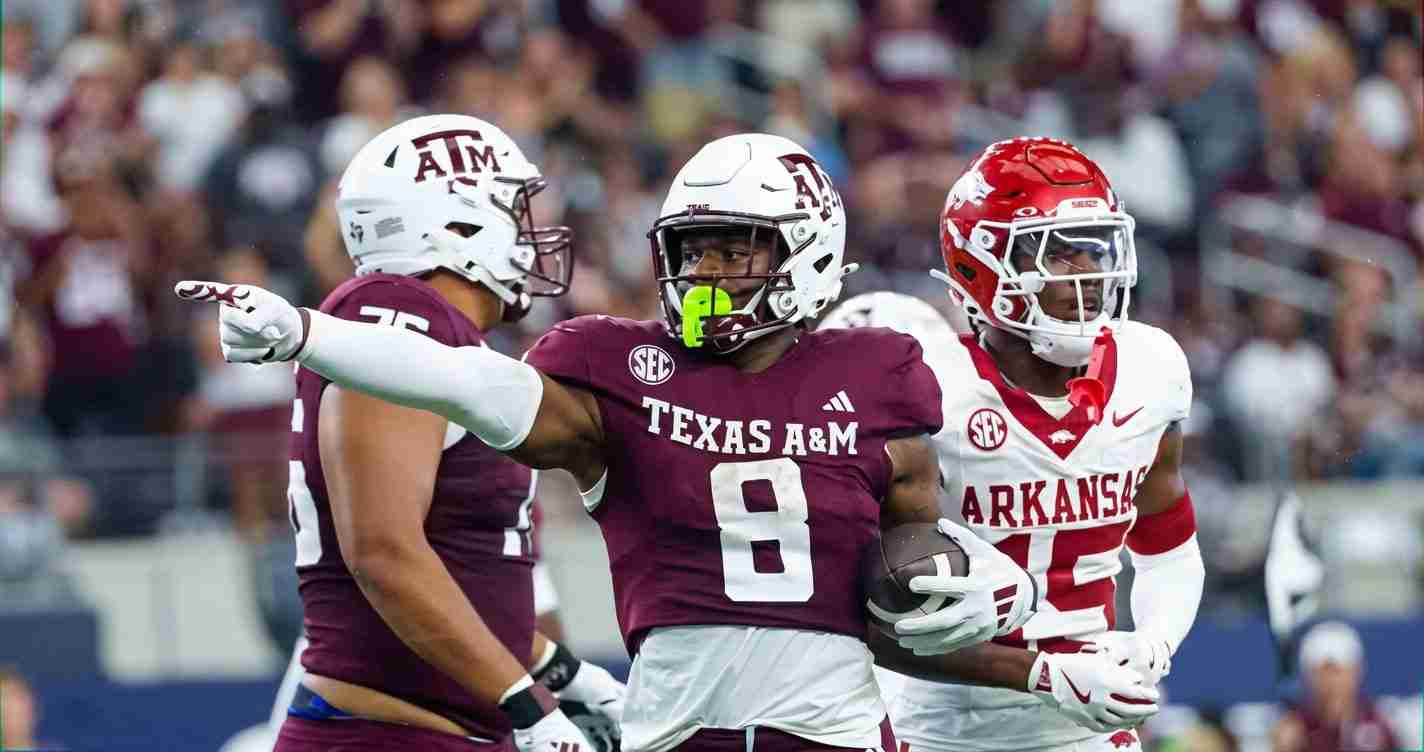
Dolphins UDFA Le’Veon Moss retires after four days, raising questions about injuries and the NIL era
Le’Veon Moss, a 23-year-old Texas A&M running back, retired from the Miami Dolphins on May 12, 2026, four days after signing as an undrafted free agent, prompting questions about his injury history and the influence of NIL.
Key takeaways
- Rapid retirement: Moss signed May 8, 2026, and was placed on the reserve/retired list May 12, 2026.
- Injury concerns: A 2024 ACL/MCL tear and a 2025 ankle injury heavily affected his draft stock.
- Contract matters: Reported UDFA guarantees were roughly $258,000, most expected to be returned after retirement.
- NIL questions: Observers speculate NIL-era earnings may change incentives for players facing injury risk, though no public confirmation exists.
Main story
Who is Le’Veon Moss?
Le’Veon Moss emerged at Texas A&M as a powerful, productive running back who started 20 of 32 games (2022–2025). Over his college career he compiled 321 carries for 1,767 rushing yards and 22 rushing touchdowns, averaging about 5.5 yards per carry and earning All‑SEC Second Team honors in 2024.
Moss offered burst and balance as a runner, posted a productive yards‑per‑carry number in limited 2025 action, and helped Texas A&M reach the College Football Playoff in 2025.
Injury history
Durability concerns dominated Moss’ draft profile. In 2024 he suffered a season‑ending torn ACL and MCL; in 2025 he sustained an ankle injury in the game against Florida that limited him to seven games. Scouts and analysts repeatedly cited those injuries as the primary reason Moss went undrafted in 2026.
Those medical questions now frame much of the public discussion about why a young player would leave the NFL so soon after signing.
Signing with the Miami Dolphins and contract details
Moss signed with the Miami Dolphins as an undrafted free agent on May 8, 2026. The team placed him on the reserve/retired list on May 12, 2026, using the league’s routine mechanism when a player under contract opts to retire.
Miami Herald reporter Barry Jackson reported Moss’ UDFA contract included roughly $258,000 in guarantees. Under standard practice, a player who retires shortly after signing typically must return most or all guaranteed money, though exact recovery depends on contract language and any offset or settlement.
Retirement, team response and reporting
The Dolphins’ transaction listing was brief and provided no medical details or a personal statement from Moss. There has been no public statement from Moss explaining his decision as of publication.
“No official source has said he failed a physical, nor has any reputable outlet reported misconduct or off‑field reasons beyond the publicly known injuries.”
Media coverage has called the move sudden and surprising, noting Miami’s 2026 roster turnover left openings for a UDFA to compete, and analysts viewed Moss as a realistic candidate to compete for the second running back role behind De’Von Achane.
NIL era impact and economic context
Commentators quickly invoked the NIL era as a possible factor. Before NIL, many college athletes relied on making the NFL to secure financial stability; now high‑profile college players can earn meaningful money while in school, changing incentives for those facing injury risk.
Important distinction: it is fact that NIL has changed college athlete compensation and that Moss is expected to return much of his UDFA guarantee. It is not a confirmed fact that NIL earnings were decisive in his retirement—no reputable outlet has published documentation of Moss’ NIL deals or earnings. The NIL explanation remains plausible but speculative without confirmation from Moss or his representatives.
Context within the Dolphins’ rebuild
Miami entered 2026 with significant roster turnover and a stated offensive retooling, conditions that often improve roster opportunities for undrafted players. Moss’ immediate retirement is one of many moves in a fluid offseason; for the Dolphins it closes one UDFA evaluation window, and for Moss it appears to be a personal decision taken shortly after signing.
Implications for Imperial Valley, California
Economic impact: The Moss story has limited direct economic effect on Imperial Valley residents, but it highlights broader trends—especially how NIL revenue streams can change career calculations for young athletes.
Political & community consequences: The case feeds statewide and national conversations about player safety, college athlete compensation, and the role of professional sports in career planning—issues relevant to Imperial Valley leaders and voters.
Social and practical effects: Coaches, families and student athletes in Imperial Valley may use Moss’ experience to emphasize injury awareness, NIL literacy, backup plans, education and long‑term insurance planning. Local programs might offer workshops on NIL, injury prevention and post‑sports careers.
Sources and further reading
- Miami Dolphins transactions page
- Miami Herald (Barry Jackson coverage)
- Heavy.com coverage and player summaries
- Texas A&M official site (player bios and stats)
Reporting and sourced details; no public statement from Le’Veon Moss has been reported as of publication.