Luxury liner Silver Whisper diverts through rough Pacific seas to rescue injured solo sailor 500 miles offshore
The luxury cruise ship Silver Whisper diverted through rough Pacific seas on May 26, 2026, to rescue a 74-year-old Canadian solo sailor with a broken shoulder from a dismasted 29-foot sailboat roughly 500 miles off the Oregon coast.
- Swift commercial response: AMVER identified Silver Whisper as the nearest suitable vessel and the U.S. Coast Guard directed the ship to perform the long-range rescue.
- Challenging conditions: Rescue occurred amid gale-force winds and seas up to about 30 feet; the diversion took roughly seven hours from tasking to arrival.
- Medical care at sea: The 74-year-old Canadian sailor, reported with a broken left shoulder, was brought aboard and treated before arrival in Vancouver.
- Coordination mattered: Coast Guard fixed-wing aircraft provided aerial overwatch and communications while helicopter hoist was not feasible at that range.
Overview
On May 26, 2026, the Silversea Cruises vessel Silver Whisper altered course and steamed through rough Pacific waters for about seven hours to reach and rescue a solo sailor whose roughly 29-foot sailboat had been demasted and lost power roughly 489–500 miles off the Oregon coast. The action followed a U.S. Coast Guard directive after AMVER identified the cruise ship as the nearest capable commercial vessel (CruiseHive; BeachConnection).
How the distress unfolded
Distress relay and tracking: Watchstanders in the U.S. Coast Guard’s Northwest District received a relay via the Joint Rescue Coordination Center in Victoria, British Columbia. The solo sailor reported a demasted vessel, loss of engine power and communications while en route from Hawaii to British Columbia amid gale-force winds and large seas. A handheld satellite communicator allowed the Coast Guard to track and maintain long-range contact (BeachConnection).
Why a cruise ship — not a helicopter — did the rescue
Helicopter hoist was not feasible due to the extreme distance from shore; instead the Coast Guard mounted fixed-wing aerial overwatch using C-27J Spartan aircraft and activated AMVER to locate nearby commercial ships. Under international SOLAS obligations, merchant vessel masters must render assistance when safe and practicable, so the Coast Guard directed Silver Whisper to divert and complete the rescue while aviation assets coordinated communications (CruiseMummy; Marine Insight; BeachConnection).
On-scene rescue and sea conditions
Captain Michele Macarone Palmieri altered course after receiving the Coast Guard tasking and the ship closed on the disabled sailboat—reported as the roughly 29-foot craft named April Alice or simply Alice in some accounts. Passengers described the search as “a needle in a haystack”; the diversion took about seven hours from the ship’s passenger perspective (CruiseHive; CruiseMummy).
Sea state: Multiple reports cite gale-force winds and seas up to ~30 feet where the sailboat was disabled; passengers said the ship retracted stabilizers and ordered guests to cabins to perform the rescue in heavy seas (BeachConnection; Fox News travel).
After reaching the dismasted boat—battered and without its mast—Silver Whisper launched a rescue operation. Reports indicate crew brought the injured sailor aboard within about an hour; ship medical staff treated the left-shoulder injury en route to Vancouver, where the sailor was expected to disembark for further care (CruiseHive; BeachConnection).
Role of Coast Guard aviation and AMVER
Although helicopters could not reach the scene, fixed-wing C-27J Spartan aircraft from Sacramento provided initial long-range response and aerial overwatch; a second C-27J later maintained communications and monitoring as Silver Whisper closed in. The AMVER system was central to identifying the cruise ship as the closest capable vessel and routing it to the sailor in distress (BeachConnection).
Passenger eyewitness accounts and images
Multiple passengers posted on social media about the multi-hour event. One passenger wrote the crew found the man alive “with a broken shoulder” and praised the captain and crew for the rescue. Photos shared by passengers show the small, mastless sailboat and the rescued sailor wearing a green hat in at least one image (CruiseMummy; CruiseHive).
“They found the man alive, with a broken shoulder,” a passenger wrote, praising the captain and crew for the rescue.
A passenger-cited claim that a Silver Whisper crew member was injured during the operation appears in some social-media and passenger accounts; that assertion is not corroborated by Coast Guard or official cruise-industry releases and remains unconfirmed (Fox News travel).
About Silver Whisper
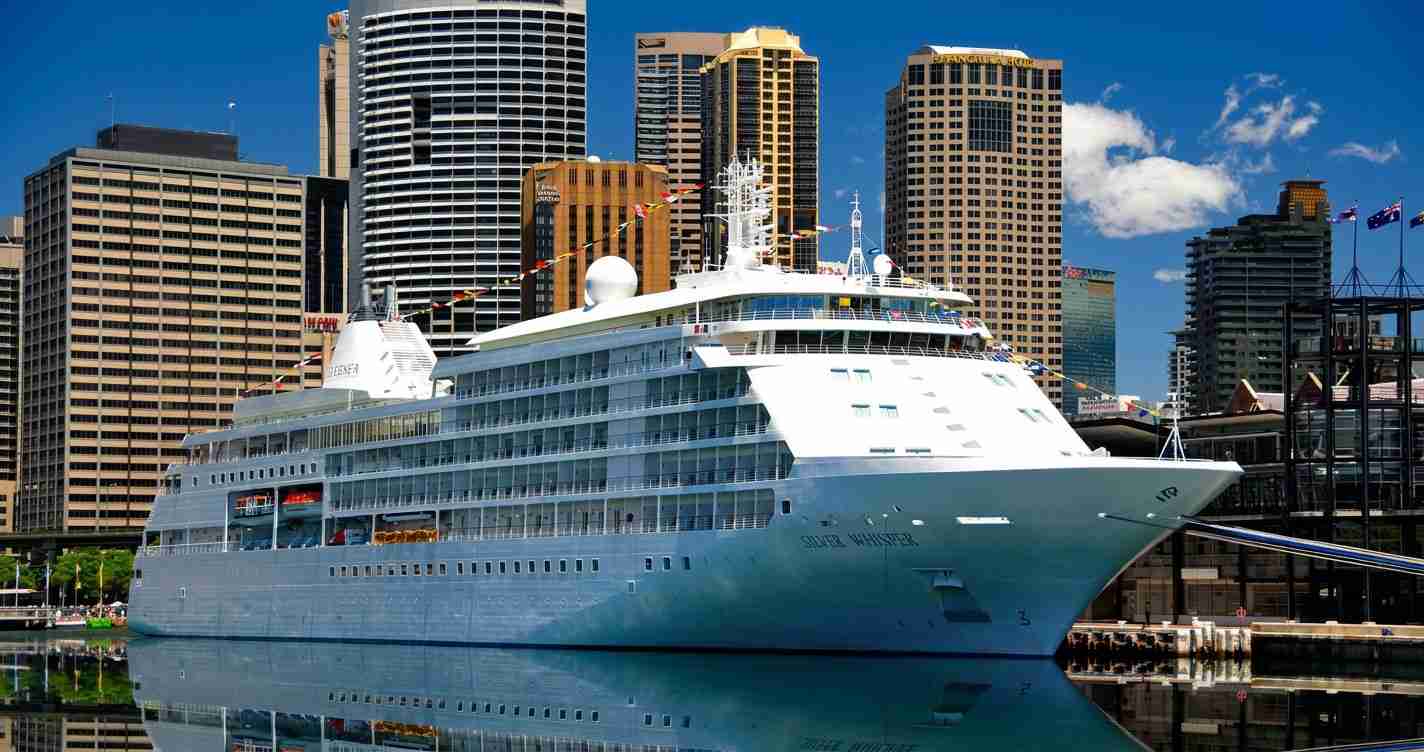
Silver Whisper is a 28,258-gross-ton luxury cruise ship carrying about 392 guests, operated by Silversea Cruises, a unit of Royal Caribbean Group. The ship was concluding a 24-night one-way voyage from Papeete, Tahiti, to Vancouver when it diverted to assist, drawing attention to the contrast between luxury travel and the demands of long-range maritime rescue (CruiseHive; Marine Insight).
Discrepancies and what remains unconfirmed
Most outlets align on date, location, and the roles of Silver Whisper and the Coast Guard. Minor differences appear in sailboat naming—some sources call it April Alice, others simply Alice—and in exact miles offshore (about 489–500 miles reported). The claim of a crew injury aboard Silver Whisper comes only from passenger posts and lacks official confirmation (CruiseMummy; BeachConnection; Fox News travel).
Implications for The Imperial Valley, California
Economic: Though geographically distant, the incident highlights Pacific shipping and travel ties that could affect local tourism businesses and travel agents who market Pacific cruises. Emergency-response firms and medevac providers in California may use lessons from long-range coordination to promote training and equipment to ports and mariners (BeachConnection).
Political: For moderate voters in the Imperial Valley, the event underscores federal Coast Guard capacity and interagency cooperation, potentially informing local conversations about funding and civilian vessel roles in maritime safety (Marine Insight).
Social and cultural: Families with seafaring ties may find reassurance in AMVER and SOLAS frameworks; local boating clubs can emphasize satellite communicators, float plans and safety gear. The image of a luxury liner rescuing a solo sailor invites human-interest conversations about duty and seamanship (CruiseHive).
Practical takeaways: Maintain and test emergency satellite communicators, file float plans for long passages, and prepare for long-range rescues that may rely on civilian ship diversion rather than helicopters. Health providers should plan for stabilization and transfer protocols for patients arriving from distant-sea rescues (BeachConnection).