Ocean of Idled Cars: How Victorville Became the Mojave Storage Site for Volkswagen’s Dieselgate Fallout
In the aftermath of the 2015 Dieselgate scandal, Volkswagen stored more than 350,000 repurchased Volkswagen and Audi diesel cars near Victorville, California, turning Mojave lots into sprawling storage sites as vehicles awaited fixes, resale or scrapping.
- Mass buybacks and repairs: U.S. regulators required Volkswagen to buy back or repair hundreds of thousands of affected diesel cars; many were held in dry lots to await fixes.
- Victorville as storage: The Mojave’s arid climate attracted Volkswagen to large low-cost sites near Victorville to limit corrosion while cars were maintained as inventory.
- Ongoing logistics: Volkswagen ran maintenance crews to start engines, check batteries and move vehicles so they could be fixed, resold, exported or scrapped.
- Cost and mitigation: The scandal led to multibillion-dollar settlements and funding for environmental mitigation and zero-emission investments.
What happened: the scandal in plain terms
In September 2015, U.S. regulators discovered that Volkswagen had installed software in certain diesel models that recognized test conditions and reduced emissions only during lab testing. On the road, the software reduced emissions controls to improve performance and fuel economy, producing nitrogen oxides (NOx) far above legal limits. The deception affected hundreds of thousands of cars in the United States and many more around the world. Sources include summaries of the broader Volkswagen emissions scandal and reporting on the storage and accounting challenges at the time via industry coverage.
Regulatory and corporate response: Volkswagen executives admitted the wrongdoing after pressure from regulators. CEO statements at the time acknowledged the company’s failure to follow the rules and the U.S. Department of Justice pursued legal action that culminated in a large settlement covering buybacks, repairs and funds for environmental programs; see the U.S. Department of Justice summary.
The buyback, the storage challenge and why the Mojave
U.S. courts and regulators required Volkswagen to offer owners the chance to sell affected cars back or have them fixed. In the U.S., nearly 500,000 2.0‑liter diesel vehicles were implicated; participation in the recall had to meet strict targets under settlement terms. That left Volkswagen with an unprecedented number of cars it could not lawfully sell until fixes were approved (see U.S. settlement details and the general Volkswagen emissions scandal overview).
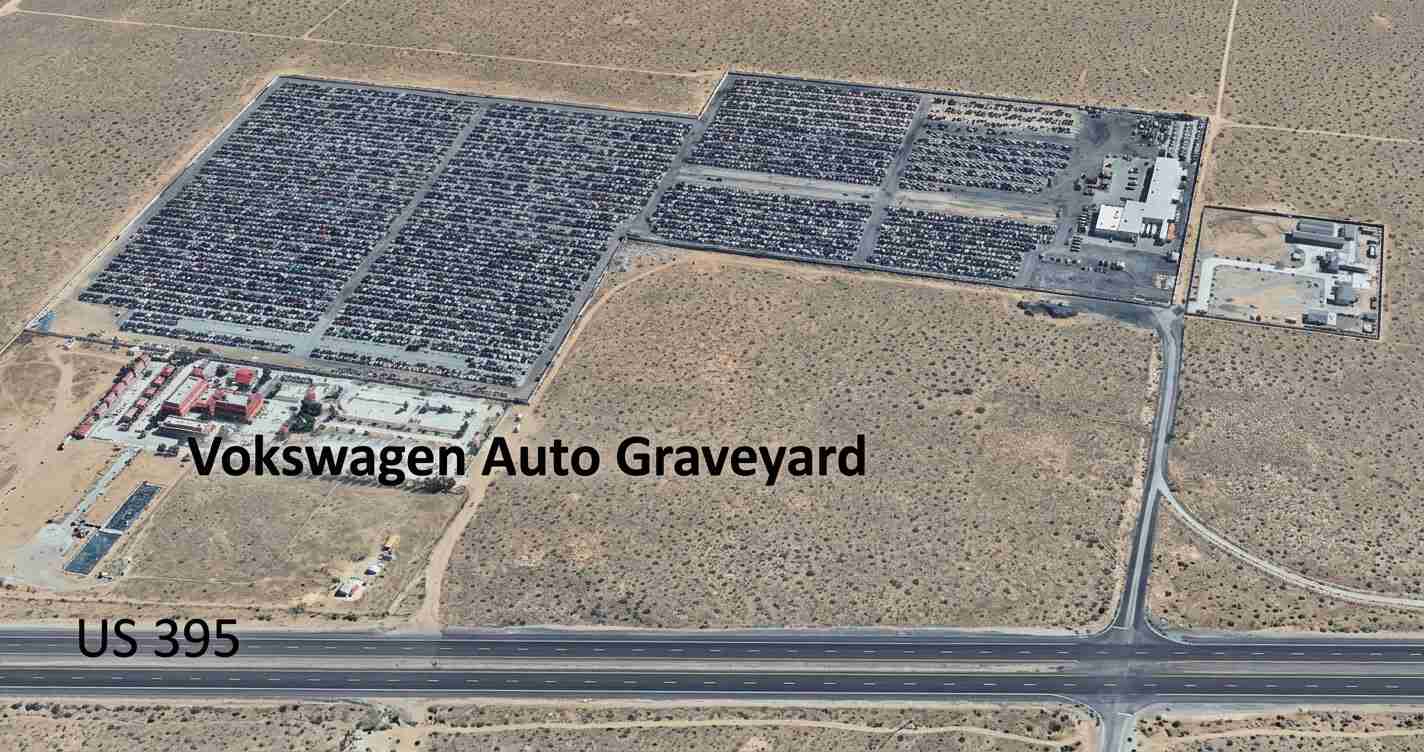
Finding places to park that many vehicles was a logistical problem. Volkswagen rented large, low-cost properties across the country — from an abandoned stadium in Detroit to a former paper mill in Minnesota — but the most visually striking site became a vast lot in the Mojave Desert near Victorville. The dry desert air helps prevent rust and corrosion, making the Mojave a strategic choice for temporary automotive storage; reporting on those storage practices appears in industry reporting and background on the scandal is summarized at the Wikipedia entry.
Victorville Dieselgate cars: maintenance, movement and fate
Despite the eerie appearance of a car graveyard, Volkswagen treated the lot as active inventory. The company employed full-time crews to start engines, move vehicles, and check batteries. These maintenance steps kept the cars in better condition than if they had been left unattended in damp climates. The aim: when emissions fixes were approved by U.S. regulators, vehicles could be returned to the road as certified used cars or, if necessary, be exported or scrapped. Industry coverage of these operational details is summarized in accounting and logistics reporting.
Over time, many vehicles were modified and resold. Others were found too old or too damaged and were sent to scrap yards. The scale and visibility of the Victorville site made it a potent image of both the scandal and the cost of compliance. While the Mojave lot drew the most attention, it was only one part of a nationwide logistics effort to manage a legal and technical crisis.
Legal and financial fallout
Multibillion-dollar costs: The U.S. settlement required Volkswagen to spend billions on buybacks, repairs and environmental mitigation. The agreement included funds for zero-emission vehicle investments and a NOx mitigation trust to address health and environmental impacts. The total U.S. liability and allocated funds are detailed in the Department of Justice announcement.
Broader impact: reputation and the auto industry
The scandal damaged Volkswagen’s reputation and cast a shadow over diesel technology and other automakers. Reporting and studies showed the fallout affected sales and public trust in German carmakers more broadly; see the Notre Dame study summary and general background at the Volkswagen emissions scandal entry. Regulators worldwide tightened testing and oversight as a result, and the episode accelerated conversations about cleaner drivetrains.
Implications for The Imperial Valley, California
Economic effects
Although the Dieselgate storage sites were largely outside the Imperial Valley, the scandal’s ripple effects reached the region. Settlement funds aimed at zero-emission vehicle technology and infrastructure could become opportunities for local suppliers and installers if EV investments expand in Southern California. Conversely, reduced trust in used diesel vehicles could depress resale values for similar models in regional used-car markets. Key settlement details are summarized in the DOJ settlement summary.
Environmental and public health concerns
Though the Victorville lot itself sits north of the Imperial Valley, the scandal highlighted local stakes in air quality. The Imperial Valley already faces air pollution challenges from agriculture, industry and cross-border sources. The revelations about excess NOx emissions from diesel vehicles underscore the importance of strong emissions controls for protecting regional air quality and public health. Federal and state mitigation funds from the settlement have supported broader NOx reduction projects that could benefit high-pollution regions like the Valley (see settlement mitigation programs).
Politics and regulation
The scandal prompted stricter oversight and testing rules for automakers. For local leaders and officials in Imperial County, the episode reinforces the need to press for clear enforcement of emissions standards and to seek state and federal resources for air monitoring and mitigation. The political impact is moderate and bipartisan: voters across the spectrum expect cleaner air and honest regulation, and local policymakers can use settlement programs to press for funding relevant to the Valley’s needs (background on oversight changes is available in the Volkswagen emissions scandal summary).
Social and practical effects
For Imperial Valley drivers and used-car buyers, Dieselgate is a reminder to check vehicle histories and emissions certifications. If similar buyback programs or recalls appear in the future, local dealerships and mechanics could see increased demand for inspections and compliance services. Workforce programs tied to emissions mitigation or EV rollout could create jobs for local technicians and installers, offering practical benefits if the Valley captures federal or state funds flowing from settlements or climate programs.
Cultural relevance
The image of vast rows of Volkswagens in the Mojave became a powerful local and national symbol — a visible reminder of corporate failure and regulatory oversight. For Imperial Valley residents, that image connects to broader regional stories about environmental justice, air quality, and how industry behavior far from the Valley can still shape local lives and policy priorities.
Sources and notes on reporting
- U.S. Department of Justice summary of the settlement
- Volkswagen emissions scandal — detailed overview
- Reporting on storage logistics and accounting for repurchased vehicles
- Study on reputational impacts to other German automakers
Reporting note: This article draws on public records and prior reporting describing the Volkswagen emissions scandal, the U.S. settlement, and the logistics of storing repurchased vehicles. Publicly available imagery and local reporting documented the large North County lots in the Mojave near Victorville, which became emblematic of the company’s temporary solution.