Tesla to end Model S and Model X production as Fremont plant is repurposed for Optimus robots
Tesla will end production of the Model S and Model X by the end of Q2 2026, freeing Fremont plant space to build Optimus humanoid robots as the company pivots toward autonomous driving and large-scale robotics.
- Timeline: Production of Model S and Model X will be wound down starting Q1 2026 and halted by end of Q2 2026, per the Jan. 28, 2026 earnings call (Electrek, Fox Business).
- Factory shift: Fremont capacity that once produced up to 100,000 S/X units will be repurposed for Optimus robot assembly with ambitious long-term targets.
- Financials: Q4 2025 revenue was $24.9 billion and full-year 2025 revenue $94.8 billion, both down about 3% year-over-year (Fox Business).
- Owners/workforce: Service, parts availability, and worker retraining remain open questions as Tesla reallocates resources toward autonomy and robotics.
What Musk announced — the timeline and message
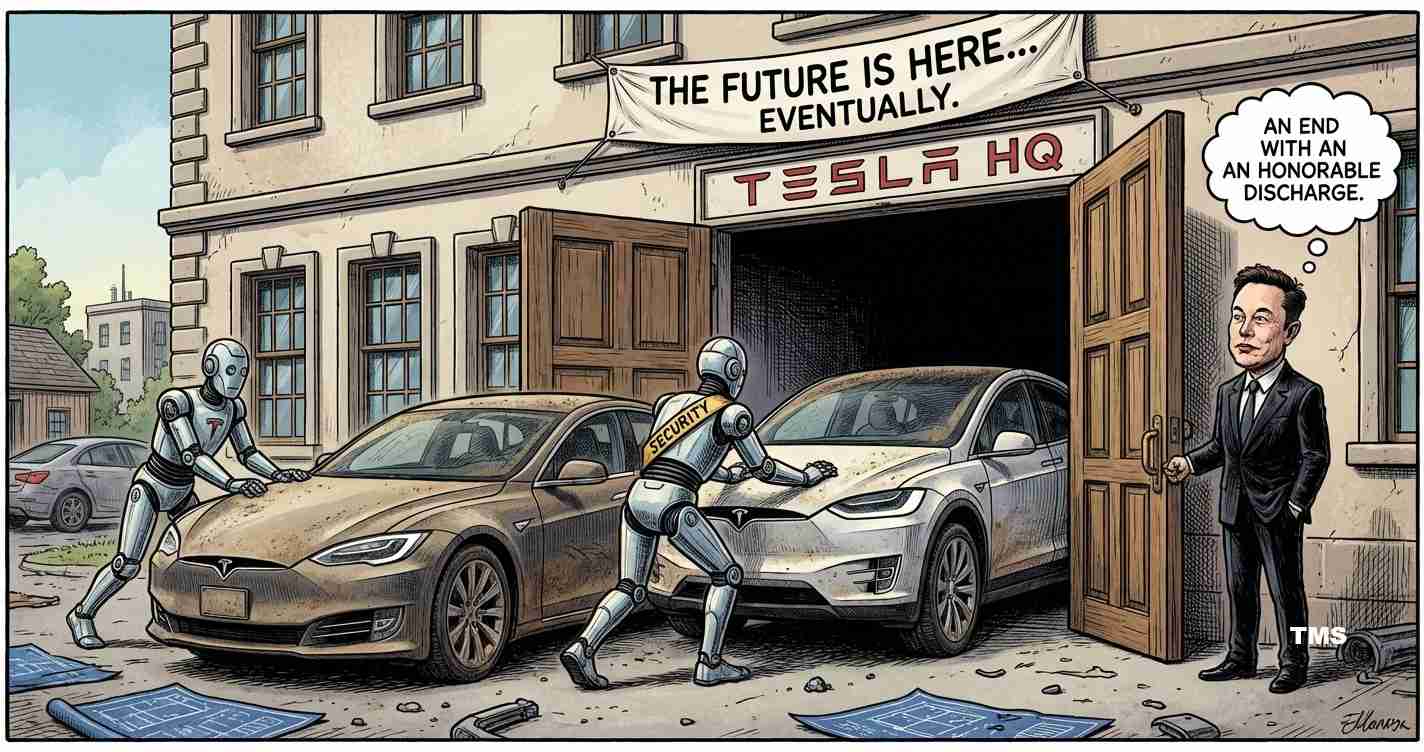
On the company’s Q4 2025 earnings call on Jan. 28, 2026, Elon Musk told investors Tesla will wind down production of the Model S sedan and Model X SUV beginning in Q1 2026 and cease manufacturing by the end of Q2 2026. Musk described the decision as giving the programs an “honorable discharge” and urged potential buyers to place orders before production ends (Electrek).
Why Tesla is pivoting to autonomy and robotics
Tesla’s leadership framed the move as part of a strategic shift toward autonomous driving technologies and robotics. Sales of the high-priced Model S and Model X have declined as lower-cost Model 3 and Model Y dominated deliveries. Public data and analyst estimates show the “Other Models” category—containing the Model S, Model X, Cybertruck and Semi—accounted for roughly 50,850 deliveries in 2025, with S and X deliveries likely near 30,000, representing under 3% of total deliveries. That shrinking share is a key reason Tesla says it can free up capacity for new product lines (Fox Business; Electrek).
Fremont factory repurposing and the Optimus plan
Tesla intends to reuse space at its Fremont factory—historically responsible for a wide range of vehicle assembly—for production of the Optimus humanoid robot. Company statements and reporting indicate work on a third-generation Optimus design aimed at mass production and a new supply chain to support large-scale robotics manufacturing. Executives outlined plans to ramp robot output over time, with long-term aspirations of up to 1 million units annually (Fox Business; Electrek; Tesla Motors Club).
Financial backdrop to the decision
Tesla reported Q4 2025 revenue of $24.9 billion, down 3% year-over-year, and full-year 2025 revenue of $94.8 billion, also down 3%. EV sales and total vehicle deliveries declined in Q4 and for the full year—factors cited by analysts as contributors to the decision to reallocate low-volume luxury capacity (Fox Business).
Recent history of the Model S and Model X
The Model S launched in 2012 and helped establish Tesla’s reputation for long-range electric performance; the Model X debuted in 2015 with falcon-wing doors and high-tech features. Both vehicles received updates over the years, including a modest refresh in July 2025 that raised prices—an update some analysts interpreted as a farewell. No direct successor or new flagship has been announced (Edmunds; Electrek).
Market reaction and shareholder context
Markets reacted mutedly after the announcement; Tesla’s closing share price was reported at $430.46, down roughly 0.10% that day. Management framed the move as part of broader 2026 investments across vehicles, robots, energy storage and batteries, and noted plans for additional production lines. Investors are evaluating whether robotics and autonomy can scale to the levels Tesla projects (Fox Business).
What owners, buyers and workers should know
- Current owners: Tesla has not announced changes to support, parts or service after production stops. Historically, out-of-production models continue to receive service, but long-term parts availability can be a concern (Edmunds).
- Potential buyers: Musk urged interested customers to order now; resale markets may see a short-term bump in demand and prices for used S/X examples (Electrek).
- Fremont workers: Repurposing to robotics will likely require retraining and retooling. Tesla has signaled investments in new production lines and battery work in 2026, but specifics on staffing transitions remain limited (Fox Business).
Implications for the Imperial Valley, California
Economic impact
Although the Imperial Valley does not host Tesla assembly, it is part of Southern California’s broader clean-technology and logistics economy. Local dealerships, independent repair shops, and parts suppliers may see demand shifts if S/X availability tightens. Farmers and businesses using EVs could feel secondary effects from pricing and parts changes. Local auto businesses should monitor parts availability and aftermarket demand (Edmunds).
Labor and workforce considerations
If Tesla shifts Fremont production toward Optimus and expands battery/storage lines, the regional labor market may see indirect effects in logistics, warehousing, and specialized manufacturing. Any direct hiring opportunities in the Imperial Valley will depend on where Tesla and its suppliers locate facilities (Electrek; Fox Business).
Energy and infrastructure links
The Imperial Valley’s interest in renewable energy and battery storage could create contracting opportunities if Tesla’s 2026 investments spur regional supplier expansion. Local governments and utilities planning grid upgrades or storage purchases should watch Tesla’s evolving product mix and pricing (Fox Business).
Practical steps for local readers
- Document service history for Model S/X vehicles and consider spare parts inventories if planning long-term ownership (Edmunds).
- Local businesses: review supply chains and consider national parts partnerships to mitigate potential shortages.
- Job seekers: watch hiring announcements and regional supplier growth tied to Tesla’s 2026 investments (Fox Business).
Reporting and sources
This article draws on reporting and the Tesla Q4 2025 earnings call captured by business and auto outlets. Primary sources reviewed include:
- Fox Business
- Electrek
- Edmunds
- AutoBlog
- CarBuzz
- YouTube recording of the call
- Tesla Motors Club forum thread
Reporting on the ground will continue as Tesla provides more detail on Fremont retooling, staffing plans, and the timeline for Optimus production.