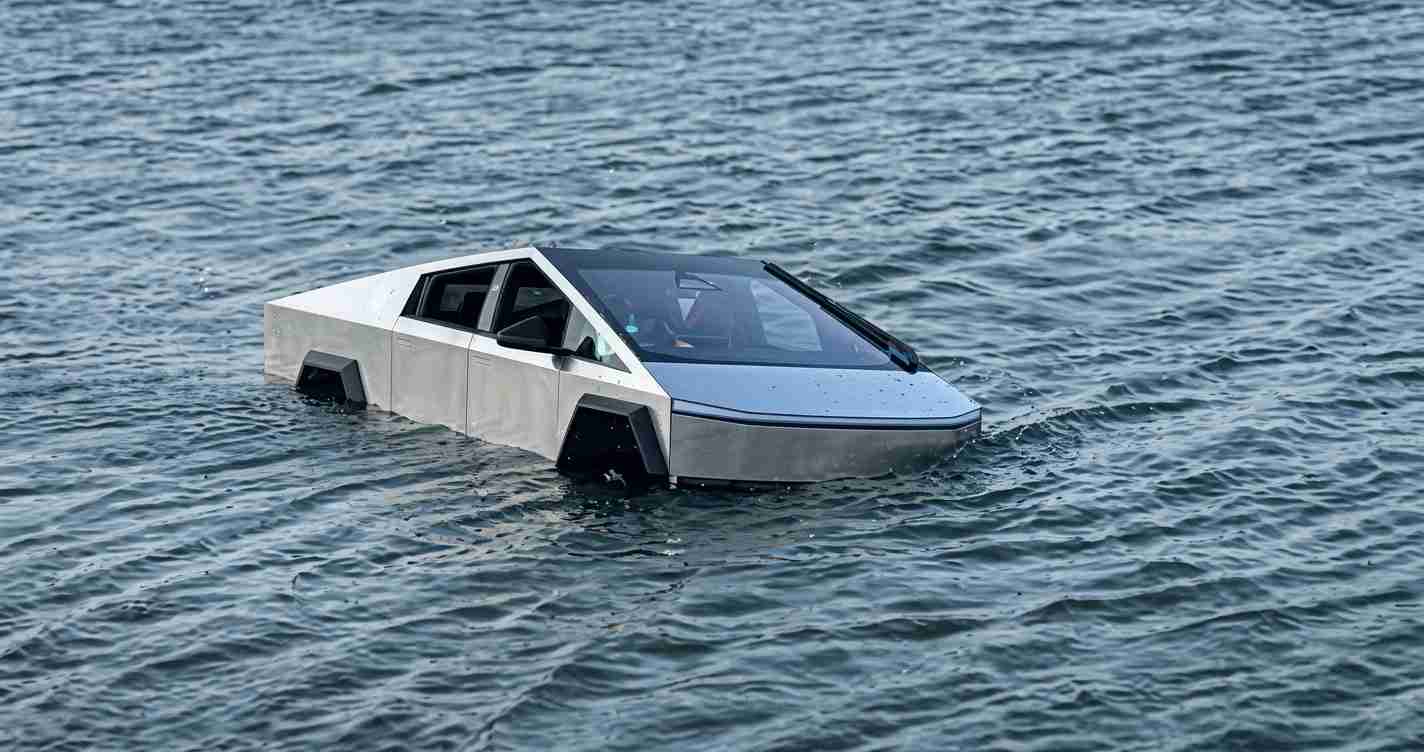
Texas man arrested after driving Tesla Cybertruck into Grapevine Lake to test Wade Mode
A Texas man was arrested after intentionally driving a stainless steel Tesla Cybertruck into Grapevine Lake near Katie’s Woods Park Boat Ramp to test the vehicle’s Wade Mode; the truck was disabled, began taking on water, and was recovered without injuries.
- Location: Katie’s Woods Park Boat Ramp, Grapevine Lake, Grapevine, Texas.
- Action: Driver said he intentionally entered the lake to test Wade Mode; the truck became disabled and took on water.
- Outcome: All occupants escaped, Grapevine Fire Department Water Rescue Team recovered the vehicle, and the driver was arrested on multiple charges.
- Warning: Police emphasized legal and environmental risks of operating vehicles in closed park or lake areas.
What happened at Grapevine Lake
Officers with the Grapevine Police Department responded Monday after reports of a partially submerged stainless steel Tesla Cybertruck near the Katie’s Woods Park Boat Ramp. When police arrived they found the pickup disabled near the shoreline and taking on water.
According to investigators, the driver told officers he had intentionally driven the Cybertruck into Grapevine Lake to use the vehicle’s Wade Mode, a setting Tesla advertises for brief, shallow water crossings. The driver and any passengers exited the vehicle on their own before Grapevine’s Water Rescue Team arrived to assist with recovery. Police said no injuries were reported.
Arrest and charges
Police arrested the driver at the scene. Authorities said he faces charges including operating a vehicle in a closed section of a park or lake and multiple water safety equipment violations. Officials have not released the driver’s name in written statements; some television reports identified the driver as a 70‑year‑old man, a detail not universally confirmed.
What is Wade Mode — and what it’s not
Tesla markets Wade Mode as an off‑road feature intended to help navigate shallow water and rough terrain by temporarily raising ride height and pressurizing the battery system to reduce water intrusion into sensitive components.
Automakers and safety officials caution that such systems are for limited, shallow crossings — not prolonged or deep immersion. Grapevine Police said the driver’s experiment exceeded those limits when the Cybertruck became disabled and began taking on water; the vehicle’s protections did not prevent intrusion once the truck was in deeper conditions than intended.
Vehicle recovery and response
Photos released by authorities show the stainless steel pickup partially submerged near the boat ramp as emergency crews worked to recover it. The Grapevine Fire Department Water Rescue Team assisted in removing the disabled vehicle from the lake. Police emphasized the response tied up public safety resources and posed avoidable risks to rescue personnel.
Officials also flagged potential environmental concerns when motor vehicles enter freshwater bodies. Even with sealed battery packs and protective features, submerged vehicles can leak fluids or require specialized handling. Grapevine authorities said crews worked promptly to limit environmental impact during removal.
Context: Cybertruck marketing and online testing
Since its launch, Tesla has promoted the Cybertruck’s off‑road capabilities. Owners and online videos have shown tests in mud, sand and shallow water crossings — sometimes pushing limits. The Grapevine incident is one of several cases where curiosity or attempts to demonstrate advertised features have crossed into risky behavior and potential rule violations.
Grapevine Police Cybertruck warning
“We want to remind drivers that although a vehicle may be physically capable of entering shallow freshwater areas, doing so can create legal and safety concerns under Texas law.”
In a social post and written statement the Grapevine Police Department noted the area was closed to vehicle operation and reminded the public that vehicle capability does not override local laws or safety rules. Water safety regulations and park closures may apply even when a vehicle can mechanically enter the water.
Legal and safety considerations
Legal experts say driving a street vehicle into a public lake can trigger multiple violations — trespass, park ordinance breaches, and statutory rules about launching and operating vessels. Water safety statutes, while often aimed at boats and personal watercraft, can apply when a vehicle’s operation endangers others or requires emergency response.
Safety note: Electric vehicles are not boats. Even with sealed batteries and protective systems, doors and windows can jam, electrical systems can fail, and occupants can be trapped if the vehicle sinks or tilts. Rescuers face hazards recovering heavy vehicles from water, particularly if unstable or submerged.
Implications for the Imperial Valley, California
Economic impact: Similar incidents in the Imperial Valley could tie up emergency crews and raise response costs, affect tourism and recreation, and increase cleanup or repair expenses for public boat ramps and parks.
Political consequences: Local officials may tighten enforcement of park rules or post clearer signage about vehicle restrictions near waterways; the event could spur debate about balancing recreational freedoms with public safety and environmental protection.
Social effects: Emergency services may amplify public education about the risks of driving vehicles into canals, lakes or the Salton Sea. Community norms and reporting may shift to prevent repeat incidents.
Practical applications for residents
- Know local rules: Check posted rules at lakes, canals and launch ramps before bringing vehicles near water.
- Don’t test features in public waters: Systems like Wade Mode are for limited use — avoid experimenting where depth and conditions are unpredictable.
- Prepare for emergencies: Keep phones charged, have life jackets available when near water, and avoid actions that put rescuers at risk.
Reporting notes
This article is based on on‑scene accounts and statements released by the Grapevine Police Department and reporting from local media. Times Media Service reached out to Grapevine authorities and to Tesla for additional comment. Initial coverage cited Grapevine Police Department social posts and statements to local newsrooms; television reports and national summaries also reported on the arrest and recovery.
Sources
- Grapevine Police Department statements and social posts
- Local station coverage and on‑scene photos released by authorities
- National summaries and outlets reporting on the incident, including television affiliates and national outlets referenced in initial coverage