Jackie and Shadow return: Big Bear bald eagles lay new egg on Big Bear Lake nest cam after raven raid
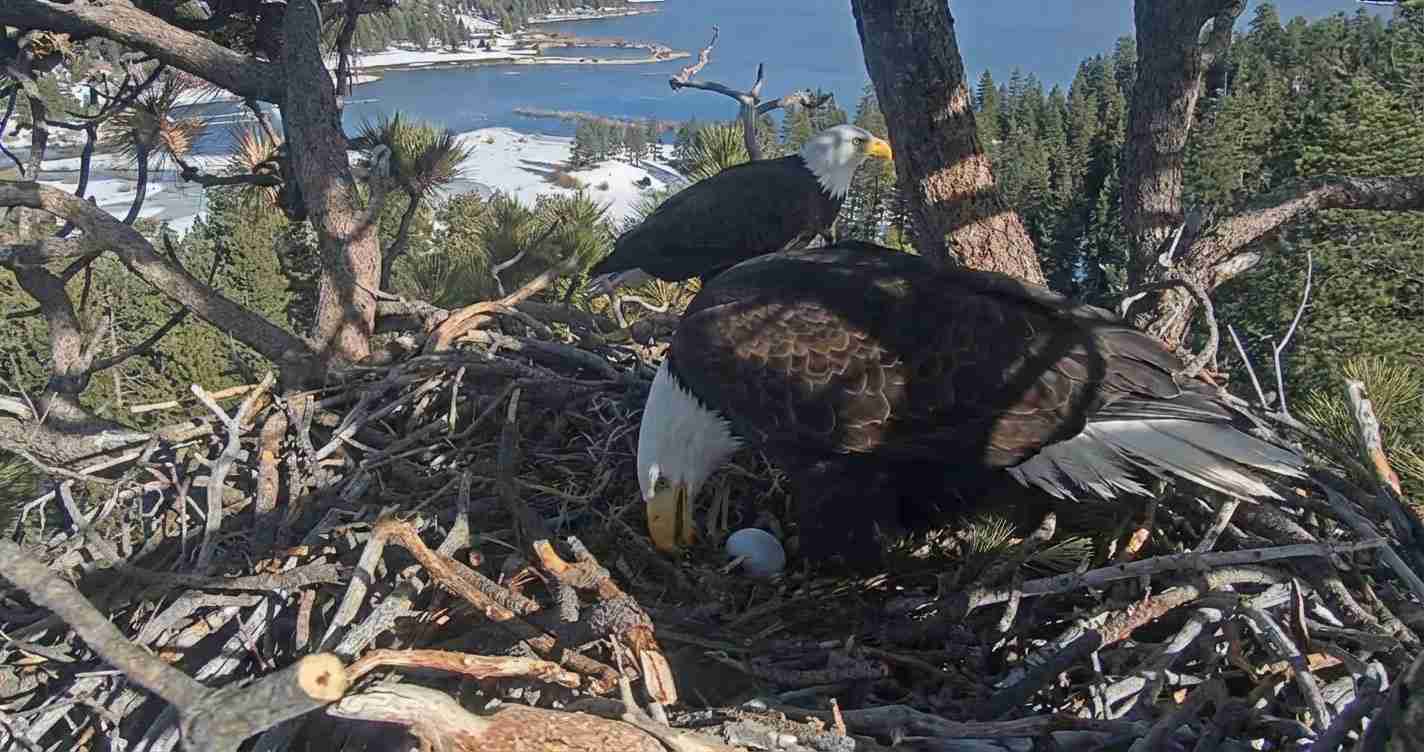
Jackie and Shadow, Big Bear Lake’s famed bald-eagle pair, laid a new egg at about 2:30 p.m. PT on Feb. 24, captured live on the Friends of the Big Bear Valley nest cam after earlier eggs were lost to raven attacks.
Key takeaways
- New egg laid: Jackie laid an egg about 2:30 p.m. PT Feb. 24, seen live on the Friends of the Big Bear Valley nest cam.
- Second clutch attempt: This is a second clutch after two earlier eggs (Jan. 23 and Jan. 26) were breached by ravens on Jan. 30.
- Incubation timeline: Bald-eagle eggs typically incubate ~35 days and are often laid about three days apart.
- Community monitoring: The FOBBV 24/7 stream draws global viewers and helps volunteers monitor threats like ravens.
What happened on Feb. 24
Live viewers worldwide watched the moment Jackie arrived with nesting material, settled into the nest and revealed a fresh egg at about 2:30 p.m. Pacific time on Feb. 24.
Video from the Friends of the Big Bear Valley cameras shows Jackie briefly standing to inspect the egg, then settling to incubate while Shadow returned minutes later and the pair resumed normal incubating behavior. See coverage from CBS News and ABC7 for video excerpts and timelines.
Friends of the Big Bear Valley noted Jackie “did a great job and she is now resting,” and added it was not yet clear whether additional eggs would follow this season.
Timeline and the raven attacks
This pair’s season began with two eggs laid on Jan. 23 and Jan. 26. Those eggs were breached by ravens on Jan. 30 while both adults were away from the nest for several hours; Shadow reportedly left around noon and Jackie did not return in time to protect the clutch. Observers documented increased territorial and courtship behaviors after the loss, including nest repairs and mating displays (ABC7).
FOBBV highlights and community clips show nestorations — Jackie rearranging and flattening the nest — and frequent perch-to-perch courtship on the nest “front porch” and the nearby Lookout Snag (video; video).
Incubation expectations and what to watch next
Bald-eagle eggs generally incubate for about 35 days. Eggs are commonly laid roughly three days apart, so if Jackie laid on Feb. 24, a second egg could appear within several days and any chick would be expected approximately five weeks after laying (CBS News).
Watch closely for disturbances: corvids such as ravens probe nests and can target unattended eggs. The earlier loss underscores the fragility of clutches and the importance of continuous adult nest attendance.
Jackie and Shadow: local residents with a global fan base
Jackie (female, est. hatch year 2012) and Shadow (male, est. hatch year 2014) have been Big Bear Valley residents for years — Jackie since at least September 2016 and Shadow since May 2018. Since 2012 the pair has produced about a dozen eggs, with notable successful fledging years including 2019, 2022 and two eaglets raised last year, nicknamed Sunny and Gizmo (CBS News).
The role of the nest cam and community monitoring
The Friends of the Big Bear Valley maintain the primary 24/7 nest cam and a wide-view camera, streaming free on FOBBV’s YouTube channel. The live feed draws thousands of viewers and provides researchers and volunteers with behavioral data, quick detection of threats, and material for public education.
Community channels and social accounts on Instagram and TikTok amplify the eagles’ story and help FOBBV share timely updates and conservation information (sample clip; sample clip).
Conservation context and survival challenges
Nesting raptors face threats from predators, weather, human disturbance and food availability. National and local data suggest that roughly half of eaglets reach maturity; each successful hatch is therefore significant for regional bald-eagle populations (CBS News).
Protecting habitat, limiting disturbance near nests, and public education are ongoing needs. Volunteer groups like FOBBV document nest history and engage the public through the nest cam model.
Implications for the Imperial Valley
Economic: high-profile wildlife stories can boost regional tourism as birders and nature watchers plan longer trips that may include the Imperial Valley.
Political: visible public interest in nesting success and webcam streams can influence local policy discussions on habitat protection and funding for conservation programs.
Social and practical: educators and community groups in the Imperial Valley can use the FOBBV model — volunteer-run, low-impact nest cams — to expand wildlife engagement while minimizing disturbance to nesting sites.
Sources and where to watch
- CBS Los Angeles reporting on the egg
- ABC7 coverage and FOBBV statement
- FOBBV YouTube channel and nest cam
- Recent FOBBV highlight (video) and community clip (video)
Watch the Big Bear Lake nest cam for live updates on Jackie and Shadow, and follow Friends of the Big Bear Valley for ongoing notes and clips.