OJAI, Calif., July 24 (Our California Times) — Jackie, the well-known Big Bear bald eagle, is still in critical care after receiving a life-saving blood transfusion, but caregivers say she is showing some signs of improvement. For people following the case, the key point is simple: the transfusion may have stabilized her enough for doctors to keep looking for the cause of her illness, but it does not mean the danger has passed.
What happened to Jackie?
The County of Los Angeles Department of Parks and Recreation said its San Dimas Raptor Rescue team found Jackie on the ground near Big Bear Lake and took her for treatment early Saturday morning. Friends of Big Bear Valley, the nonprofit that monitors Jackie’s nest through a live camera, said she had not been seen for days before the rescue.
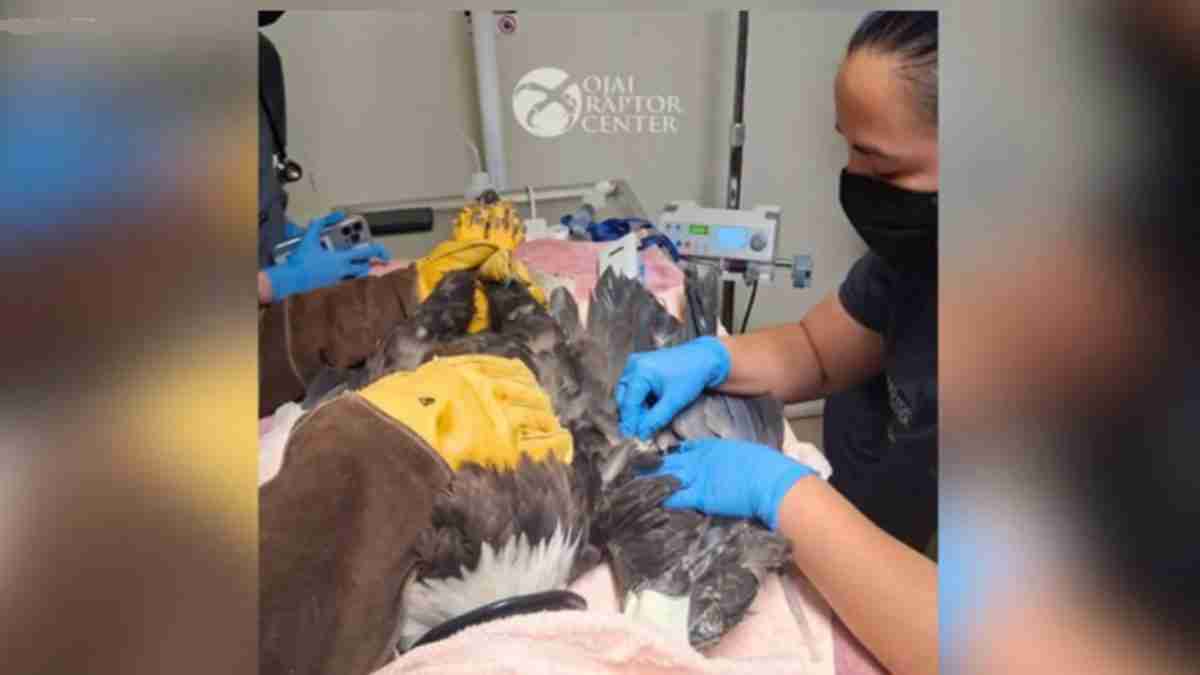
Caregivers at the Ojai Raptor Center said Jackie remained critically ill but alert. In updates shared by the nonprofit and reported by ABC7, they said she was eating, perching and showing improvement even as she remained severely anemic.
Why did she need a blood transfusion?
Veterinarians said Jackie’s anemia was serious enough to require a transfusion. The treatment was made possible with help from Spirit, the resident bald eagle at California Living Museum in Bakersfield.
In basic terms, a transfusion can help replace lost or damaged blood cells and give a very weak animal a better chance to recover. In Jackie’s case, caregivers said the procedure appears to have helped, but they have not yet determined what caused the problem in the first place.
What have tests ruled out?
So far, the veterinary team has said testing did not show clear signs of lead toxicosis. Caregivers also said they did not find foreign objects such as fishing hooks, fishing line, weights or other metal items.
Friends of Big Bear Valley said Jackie also underwent a CT scan, which showed no obvious signs of cancer or metals in her body. The Ojai Raptor Center said her kidney inflammation appears to have improved, but it is still working to identify the underlying cause of her illness.
What does this mean for Jackie’s outlook?
It means the situation is still serious. The rehabilitation team said Jackie remains in critical care and that it is too early to give a reliable prognosis.
That caution matters because wildlife medicine often depends on waiting for test results and watching how an animal responds over time. In Jackie’s case, caregivers said she is brighter and stronger than before, but they have not said she is out of danger.
What is happening at the nest?
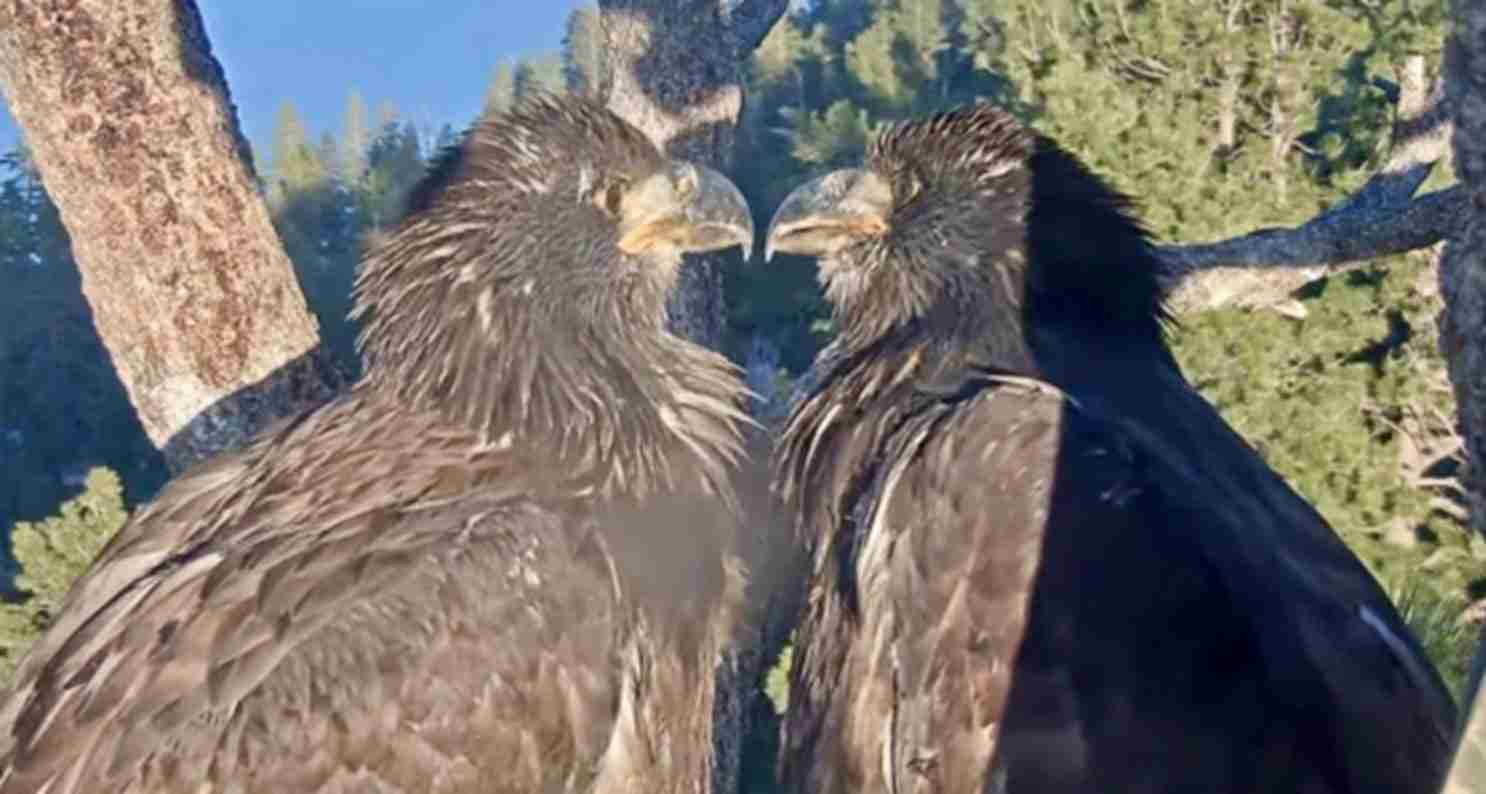
While Jackie is being treated, Friends of Big Bear Valley said her mate, Shadow, is caring for their eaglets, Sandy and Luna, and protecting the nest and territory from other subadult eagles in the area.
The nonprofit said Shadow has continued feeding and guarding the young birds during Jackie’s absence. That leaves the Big Bear nest, which many people watch online, in a temporary but active family arrangement while Jackie recovers.
For now, the big question is not just whether Jackie survives the next stage of treatment, but whether veterinarians can identify what made her so sick in the first place.