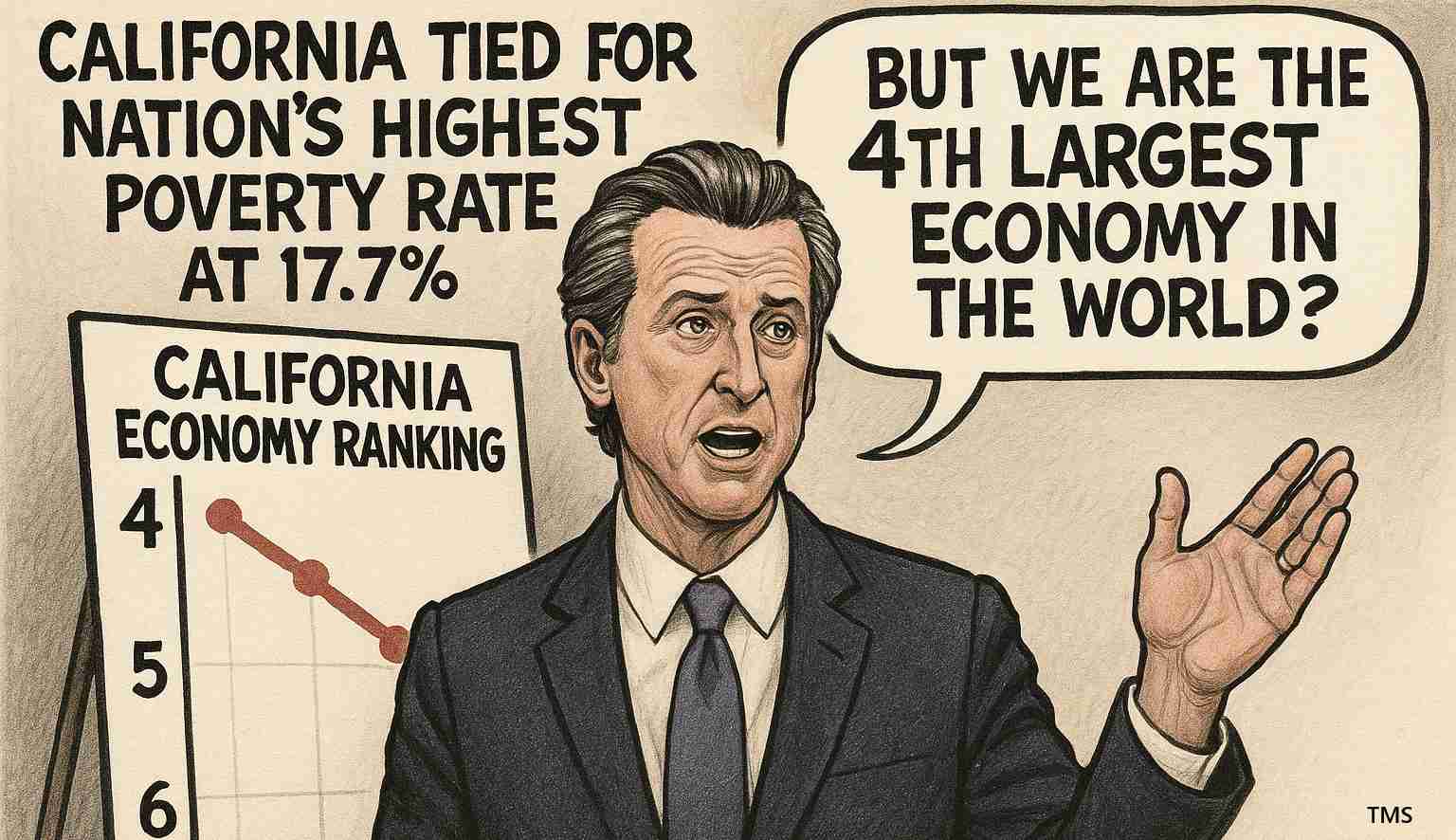
California Tied for Nation’s Highest Poverty Rate at 17.7% as Nearly 7 Million Struggle
California’s poverty rate reached 17.7% in 2024, tying Louisiana and leaving nearly seven million residents in poverty as housing costs rose and pandemic-era supports expired, with children, seniors and renters disproportionately affected across the state.
Key takeaways
- Statewide rate: California’s poverty rate is 17.7% in 2024, tied with Louisiana — source: Xinhua News.
- Scale: Roughly 7 million Californians live in poverty — more people than the combined populations of several large California cities — source: Xinhua News.
- Children and seniors hit hard: Child poverty rose to 18.6% in 2024; seniors 65+ have a 21.1% poverty rate — analysis: California Budget & Policy Center and Xinhua News.
- Renters vulnerable: 27.1% of renters live in poverty versus 11.1% of homeowners — reporting: KFI AM 640.
Main story
What the numbers show
The latest figures trace back to U.S. Census Bureau counts reported in national outlets. After a low near 11% during expanded pandemic-era supports, California’s poverty rate climbed as emergency programs and the enhanced Child Tax Credit ended and housing costs surged — analysis from the California Budget & Policy Center and reporting by Xinhua News highlight these trends.
The sheer scale is striking: nearly seven million Californians in poverty equals the combined populations of Los Angeles, San Diego, San Jose and San Francisco, underscoring the statewide magnitude of the problem (Xinhua News).
Housing costs and poverty
Investigators point to housing as the central pressure point. When rents and home prices rise faster than wages while supports end, families cut back on basics like rent, medicine and food. Critics say the official poverty measure understates hardship in high-cost areas; the Supplemental Poverty Measure (which accounts for housing and medical outlays) shows deeper strain for many Californians — see reporting at KFI AM 640 and analysis at the California Budget & Policy Center.
Renters face the sharpest squeeze: 27.1% of renters live in poverty compared with 11.1% of homeowners, highlighting how housing market pressures fall on already vulnerable households (KFI AM 640).
Who is most affected
Children: Child poverty more than doubled from 7.5% in 2021 to 18.6% in 2024 — analysts link the surge to the end of the expanded Child Tax Credit and other pandemic-era supports (California Budget & Policy Center; Xinhua News).
Seniors: Adults 65+ have the highest age-group poverty rate at 21.1%, driven largely by rising out-of-pocket medical bills and limited retirement income (Xinhua News).
Communities of color: Black and Latinx Californians face poverty rates roughly 10 points higher than white Californians, reflecting structural gaps in wages, employment and housing access (California Budget & Policy Center).
Other high-risk groups: Single-parent households and seasonal workers are especially vulnerable — one emergency or medical bill can push them into deeper hardship (KFI AM 640).
Policy background and budget choices
The rise follows the rollback of major federal anti-poverty measures enacted during the pandemic. Expanded tax credits and direct payments helped push poverty down in 2021; as those expired, the state felt the impact. Advocates warn that recent cuts to health and food aid risk deepening hardship without targeted mitigation (California Budget & Policy Center; KFI AM 640).
Policy debates focus on restoring or reshaping supports: proposals include raising revenue from corporations and top earners, expanding housing aid, and restoring child-focused tax supports — opponents question cost and economic impact. Both sides cite the same data but propose different solutions (KFI AM 640).
Voices from communities and experts
“Families are skipping medical care and older residents are choosing between food and prescriptions,” say community leaders in hard-hit regions, underscoring how official measures can understate real hardship in high-cost places.
Researchers emphasize that policy choices can quickly move poverty rates: restoring federal supports or adding state measures could cut poverty, while further cuts would likely increase hardship (California Budget & Policy Center).
Implications for The Imperial Valley, California
Economic impact: The Imperial Valley’s lower wages, seasonal work and limited job diversity mean a higher share of residents may need county safety-net programs, food banks and clinics if statewide trends persist (Xinhua News; California Budget & Policy Center).
Housing and social effects: Although housing is generally cheaper than coastal metros, rising rents and few affordable units can push farmworker and immigrant households into overcrowding and instability, increasing pressure on local schools, clinics and social services (KFI AM 640).
Political consequences: Local officials may face higher demand for rental relief and health services and could press Sacramento for targeted funding for rural and agricultural regions (California Budget & Policy Center).
Practical steps: Immediate needs include affordable housing, medical cost relief, food assistance and child supports. Local agencies can pursue state and federal grants while employers and governments invest in training and higher-wage opportunities to reduce long-term poverty (KFI AM 640; Xinhua News).
Sources and further reading
- Xinhua News: “California ties for highest U.S. poverty rate in 2024”
- Xinhua News: “Poverty rises in California, children, seniors hit hardest”
- California Budget & Policy Center: “California’s persistent poverty crisis: 2024 rates remain alarmingly high”
- KFI AM 640: “California leads U.S. in poverty rate”
(Times Media Service)