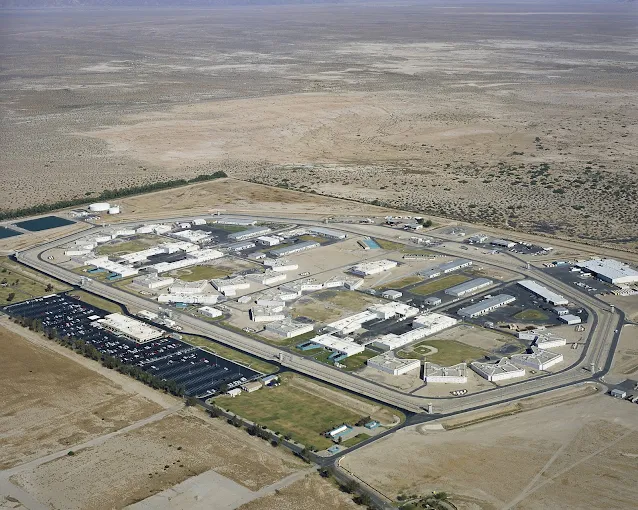
Inmates at Salinas Valley State Prison protest sweeping lockdowns, while families and local advocates in the Imperial Valley voice concern

Imperial, California (Times Media Service) – Hundreds of inmates led by participants at Salinas Valley State Prison have launched a California prison hunger strike to protest what they call “collective punishment” under new lockdown measures imposed statewide on June 12, 2025.
Sweeping New Restrictions Spark Unrest
Since June 12, the California Department of Corrections and Rehabilitation (CDCR) has enforced the largest set of lockdown measures in years at more than 20 state prisons, affecting approximately 34,000 inmates by suspending in-person visits, phone and tablet communications, and group programming. Inmates are confined for the majority of each day to cells or dormitories, with only medical care and essential services continuing.
Corrections Secretary Jeff Macomber defended the move as necessary to curb a recent surge in violence, overdoses, and contraband incidents, but legal experts and advocates argue the policy amounts to de facto solitary confinement. UCLA law professor Sharon Dolovich warned that such blanket lockdowns are “a blunt instrument” that exacerbate mental health and addiction issues rather than address root causes.
Hunger Strike Declared at Salinas Valley State Prison
On June 20, approximately 500 incarcerated people at Salinas Valley State Prison in Soledad commenced a hunger strike, demanding that CDCR adhere to constitutional protections and California regulations, and end “indiscriminate lockdowns” they say constitute collective punishment. Their letter states the strike is “not rooted in defiance but in our firm demand” for lawful treatment under Title 15 of the California Code of Regulations.
Oakland Abolition & Solidarity praised the strike as “inspiring” and warned that prisoners in other facilities under lockdown will likely join, calling CDCR’s “unified collective punishment” a catalyst for unified action. CDCR spokesperson Terri Hardy confirmed the department is monitoring hunger strikes through established protocols to ensure inmate safety.
Partial Rollback at Some Prisons
Amid protests and mounting pressure, CDCR announced on June 26 that nine prisons would see eased restrictions, restoring limited visits and communications, while twelve facilities—including Salinas—remain under lockdown pending further review. Officials cited continuing concerns over violence and contraband flow as justification for maintaining the moratorium at higher-risk institutions.
However, families and advocates say piecemeal rollbacks do little to address the collective punishment of inmates who pose no threat, and warn that prolonged isolation risks long-term psychological harm.
Legal and Humanitarian Concerns
Civil rights attorneys argue CDCR’s actions may violate state and federal law, including due-process protections and standards against punitive solitary confinement. In 2022, a Sacramento judge criticized CDCR’s prior lockdowns for merging vulnerable inmates without procedural safeguards, a decision linked to spikes in violence.
Mental health advocates point to research showing extended isolation can worsen depression, anxiety, and suicidal ideation, especially for those with preexisting conditions. They call for more targeted interventions—such as focused behavioral programs—rather than broad, punitive lockdowns that affect thousands irrespective of individual conduct.
Impact on the Inland Empire Community
Families across the Inland Empire—home to more than 18,000 incarcerated individuals in nearby state facilities like California Institution for Men in Chino—report anguish and confusion over the sudden communication blackout.
Local faith-based groups and nonprofits, including UnCommon Law and Inland Empire Justice Coalition, have mobilized to provide legal support and coordinate letter-writing campaigns urging CDCR officials to lift the lockdowns. County supervisors in Riverside and San Bernardino are also calling for transparency and regular updates to reassure constituents about inmate welfare and public safety.
Community health experts warn that anxiety over loved ones can ripple outward, exacerbating stress and mental health struggles in families already coping with economic challenges in the region. They urge CDCR to expedite the return of meaningful contact between inmates and support networks to mitigate further harm.
Chris Robertson / California Contributor (Times Media Service)
California Contributor and political advisor. Chris a California lover who calls out the Golden State’s non-sense laws.
crobertson@timesmediaservice.com