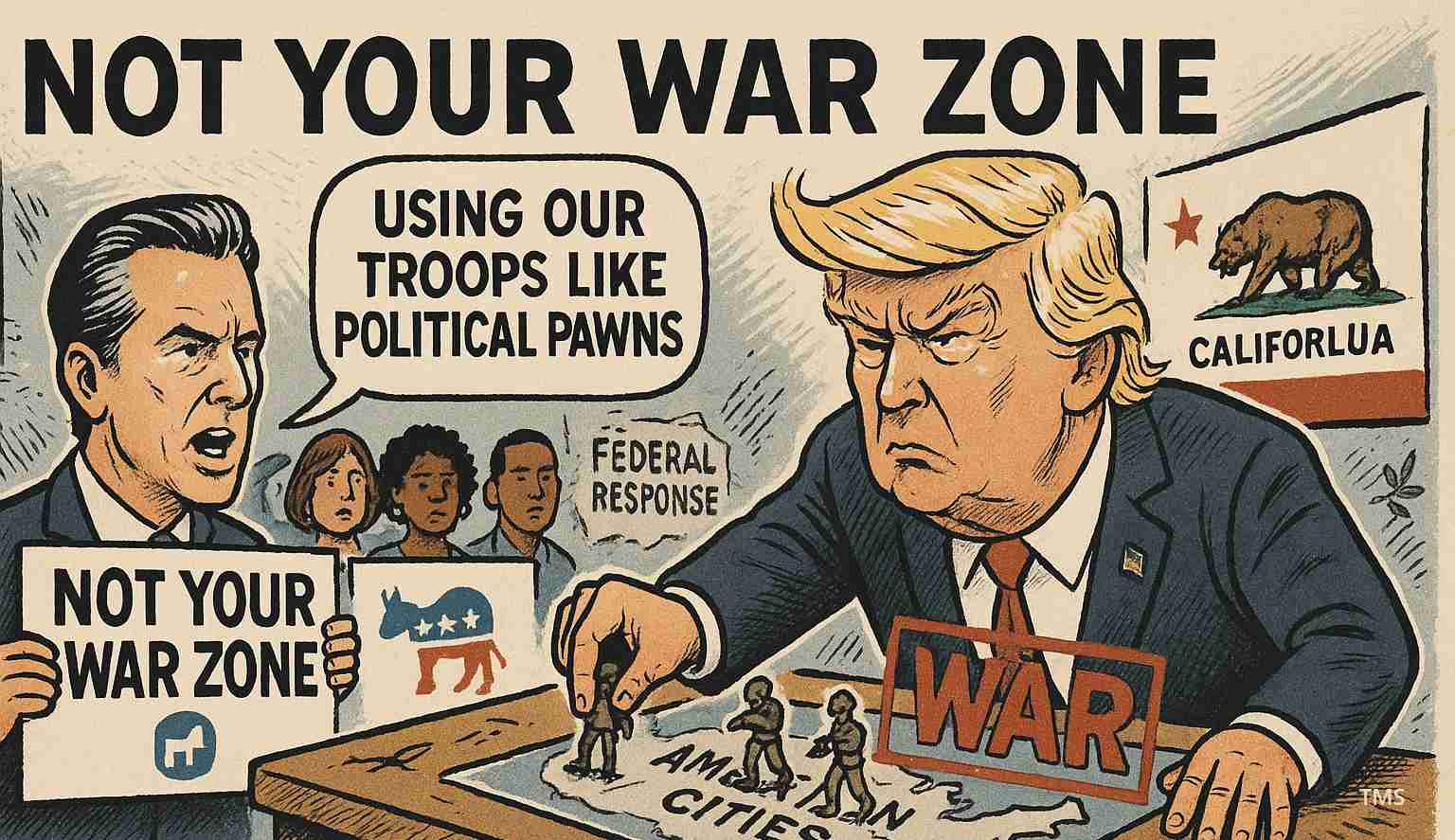
Democrats slam Trump for ‘war’ threats targeting US cities: “Not your war zone”
Democratic leaders have forcefully condemned Donald Trump’s threats to deploy federal troops and National Guard forces to Chicago and other Democratic-run cities, calling the rhetoric militaristic, unconstitutional and a dangerous escalation that could intimidate communities and erode civil liberties.
- Militaristic rhetoric: Trump used war metaphors, an altered movie quote and AI-styled imagery in posts suggesting a “Department of WAR.” Democracy Docket
- State and local pushback: Illinois Governor JB Pritzker and Chicago Mayor Brandon Johnson vowed to resist what they called unconstitutional threats. CBS Chicago
- Legal alarm: Scholars warn the plan risks violating the Posse Comitatus Act and other limits on domestic military action.
- Local effects: Regions like the Imperial Valley may face economic, social and political fallout from escalated federal immigration enforcement.
Trump’s threats and the imagery he used
Donald Trump’s public posts and briefings moved beyond standard political bravado into starkly militaristic language and visuals. He repurposed a well-known Vietnam War movie line into “I love the smell of deportations in the morning,” wrote that “Chicago is about to find out why it’s called the Department of WAR,” and shared AI-generated imagery echoing war-film motifs. Critics say these choices were intended to intimidate and escalate fear rather than calm tensions. Milwaukee Independent and Democracy Docket documented the posts and imagery.
Democratic leaders condemn Trump
Governor JB Pritzker called the comments “not a joke,” warned that the president was “threatening to go to war with an American city,” and labeled the conduct that of a “wannabe dictator.” Mayor Brandon Johnson described the threats as “beneath the honor of our nation,” urged residents to “defend our democracy,” and warned against an unconstitutional occupation. These reactions were swift and bipartisan within state and city Democratic ranks. (Reporting: CBS Chicago; Democracy Docket)
Legal and constitutional concerns
Legal scholars and observers flagged multiple red lines. Public threats to use military-style forces in American cities are historically rare and could violate constitutional protections depending on execution. Northwestern Law professor Paul Gowder warned the rhetoric could “potentially rise to the level of treason,” underscoring how grave some experts view the statements. Analysts stressed that outcomes hinge on actions taken, not words alone. CBS Chicago
Statutes such as the Posse Comitatus Act limit using the military for domestic policing. While the National Guard under state control or federal agents can be deployed in certain circumstances, legal experts say any deployment must be carefully checked by courts and Congress to avoid violating civil rights and federal limits.
Federal operations and local pushback
The rhetoric coincided with announced federal plans for large-scale immigration enforcement and the staging of federal agents and military resources near Chicago. Illinois officials reported receiving notice and demanded transparency and restraint. City leaders warned that moving armed federal personnel into neighborhoods could escalate tensions, harm community trust, and deter immigrants from cooperating with local authorities. Democracy Docket
National reaction and media framing
Media outlets and commentators across the spectrum flagged both the alarming tone and the precedent such rhetoric could set. Reporters noted a pattern: recent federal deployments and threats have focused on large, Democratic-led cities, which critics argue suggests political motives beyond public-safety aims. Supporters counter that the actions are intended to enforce federal immigration law. Coverage emphasized how imagery and language shape public perception and policy debate. Milwaukee Independent, Democracy Docket
A wider pattern and the stakes
This episode fits a broader pattern of federal threats and occasional deployments to cities in recent years. Civil rights groups and Democrats warn that repeated use of federal personnel in local matters undermines local control and civil liberties. Proponents of strong federal action maintain the goal is crime reduction and immigration enforcement. The central debate is where to draw the line between enforcing federal laws and avoiding the militarization of domestic policy.
Implications for The Imperial Valley, California
Economic impact: The Imperial Valley relies on cross-border trade and seasonal farm labor. Escalated federal raids or a hardline immigration posture could reduce available labor, raise costs, and disrupt harvests—affecting growers and local businesses. (Context: Democracy Docket)
Political consequences: Local officials may be pressured to balance public safety with protecting agricultural workers and families, potentially shifting local campaign dynamics and county or state races. (Context: CBS Chicago)
Social effects: Binational households and immigrant communities may experience increased fear, reducing engagement with local services and law enforcement and heightening anxiety in schools and clinics. (Context: Democracy Docket)
Cultural relevance: Language that frames U.S. cities as “war zones” risks stigmatizing communities and straining cultural and economic ties with Mexico. Local leaders may issue public appeals for calm and protections for residents. (Context: Milwaukee Independent)
Practical applications for residents
- Expect increased visibility of federal agents and potential checkpoints if enforcement escalates;
- Farm employers may adjust hiring practices or seek legal clarity to protect harvests;
- Local law enforcement should clarify roles publicly and reassure communities about rights;
- Community clinics and schools should prepare multilingual materials on rights and resources.
Sources and further reading
- Democracy Docket: “Trump threatens Chicago — war, immigration raids”
- CBS Chicago: “Pritzker, Johnson condemn Trump threats of troops in Chicago”
- Milwaukee Independent: “Trump condemned as ‘wannabe dictator’ after ‘Apocalypse Now’ war threat”
- People’s Dispatch: “Voices unite in opposition to threats against Democrat-run cities”
- YouTube: Footage of reactions and statements cited by local leaders