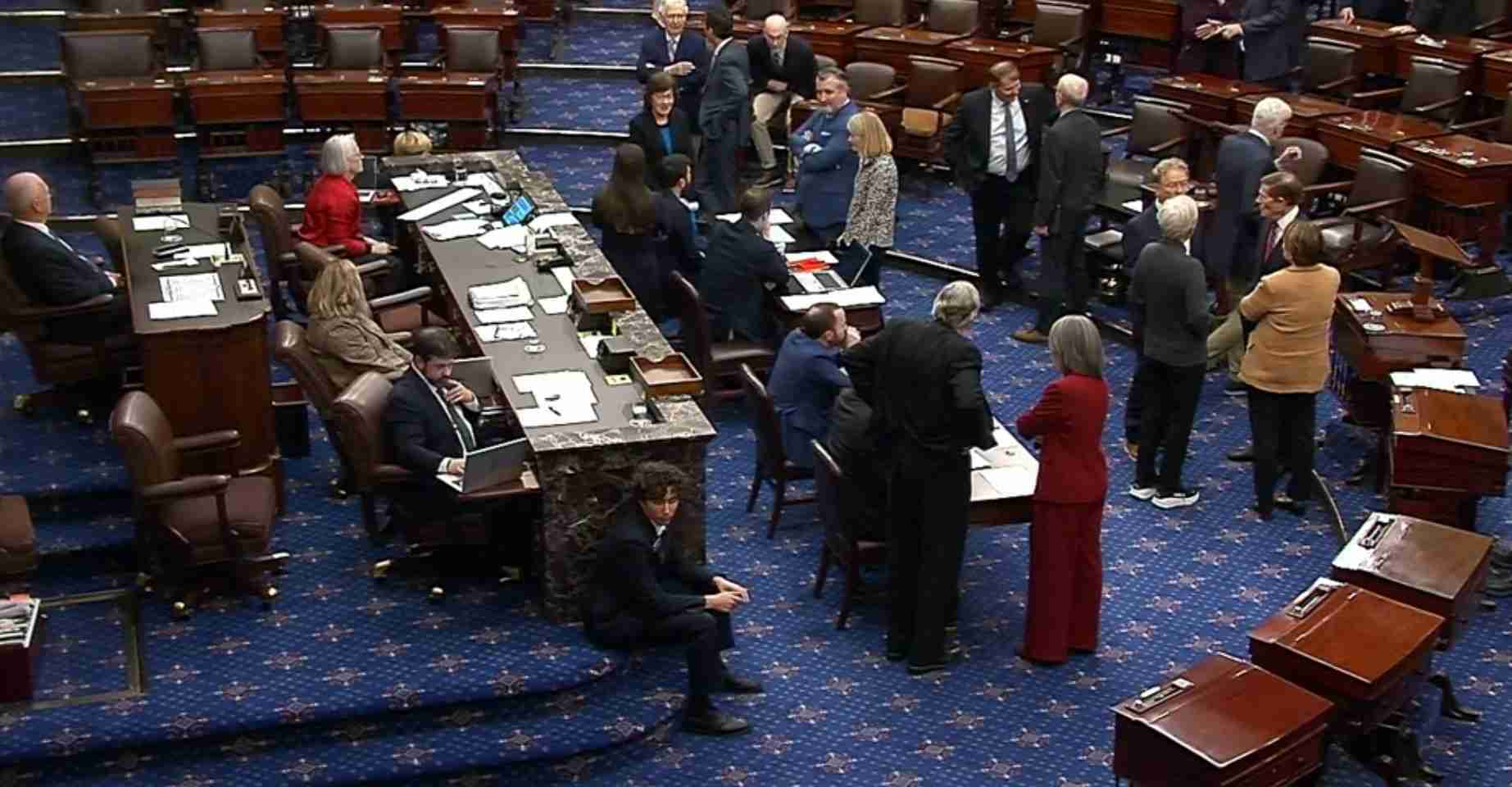
Senate Democrats break ranks to reopen federal government, despite no guaranteed Obamacare subsidy deal
Eight Senate Democrats voted with Republicans to invoke cloture on the Motion to Proceed for H.R. 5371, advancing a stopgap bill to reopen the federal government while securing only a nonbinding promise of a future vote on ACA premium tax credits.
Key takeaways
- Cloture passed 60–40: The Senate voted 60–40 to invoke cloture on the Motion to Proceed for H.R. 5371, allowing debate to begin and moving the stopgap bill forward (vote source).
- Bipartisan votes to reopen: Eight Senate Democrats joined Republicans to advance the measure without a binding ACA subsidy extension but obtained a pledged future vote (source).
- Relief for federal workers: The temporary measure restores furloughed federal employees, provides back pay, and includes protections against termination tied to shutdown actions (source).
- Obamacare subsidies unresolved: Democrats secured a promise for a later vote on ACA premium tax credits, but that pledge is nonbinding and the outcome is uncertain (source).
What the vote does — and does not — accomplish
The cloture vote (60–40) does not itself enact a final spending bill. Instead, it permits the Senate to take up H.R. 5371, debate amendments, and eventually vote on the stopgap measure intended to reopen agencies and restore services.
Immediate outcome: federal operations are set to resume, furloughed workers are expected to return and many will receive back pay, and the bill includes language to halt mass reductions in force tied to the shutdown (vote source).
Who crossed the aisle and why
Eight Senate Democrats broke with party leadership to advance the bill. Named participants include Sens. Maggie Hassan (N.H.), Tim Kaine (Va.), Angus King (Maine, I), Jacky Rosen (Nev.), and Jeanne Shaheen (N.H.), among three others. Several of these senators were active in negotiations or publicly explained their votes (source).
“We needed to restore jobs and back pay for federal employees,” said Sen. Tim Kaine, emphasizing the human impact of continued closures.
Supporters of the procedural vote cited the immediate harms of the shutdown: disruption to federal workers, halted aid programs, and delays affecting families, veterans and low-income communities. Senators like Sen. Hassan pointed to constituent pressure and rising health-care costs as factors in their decisions (source).
Why Democrats accepted a promise instead of a guarantee
Democratic leaders initially sought a binding extension of Affordable Care Act (ACA) premium tax credits — subsidies that lower monthly marketplace premiums for many households. But political and practical realities shifted the calculus: prolonged shutdown damage to federal employees and public services weighed heavily against holding out for a guaranteed deal.
Negotiators opted for a pledged future vote on subsidy extensions rather than prolonging the shutdown. Critics in the Democratic caucus argued this concession reduced leverage without assuring passage of the subsidies; supporters framed it as restoring operations while keeping the subsidy question on the calendar (source).
What remains unresolved: the Obamacare subsidies vote
The central outstanding issue is whether Congress will extend or make permanent ACA premium tax credits. Democrats won a pledge that the Senate will hold a vote after the government reopens, but the pledge is nonbinding and falls short of the automatic renewal many advocates sought.
That uncertainty matters for low- and middle-income households that rely on subsidies to afford premiums. A future vote could succeed, fail, or be delayed, depending on amendment offers, negotiations and the balance of votes when the issue is taken up.
Immediate impacts of reopening
- Federal workforce: Furloughed employees should return to duty and, under the stopgap bill, many will receive back pay.
- Restarted services: Delayed processing of applications, permits, law-enforcement coordination and other functions will resume, easing burdens on businesses, veterans and local governments.
- Public health and marketplaces: Agencies that support public-health programs and marketplace operations will resume normal functions, though subsidy uncertainty may keep some market actors cautious.
Political reaction and context
Reactions split along partisan lines. Some Democrats sharply criticized the move, arguing Republicans leveraged the shutdown for political gain; Republicans praised reopening and accused Democrats of political gamesmanship. The episode underscores how a small number of senators can shape outcomes in a narrowly divided Senate.
Next steps in Congress
With cloture secured, the Senate will debate H.R. 5371, consider amendments, and eventually vote on the stopgap funding measure. If the Senate passes the bill, it will either return to the House or move to the president for signature, depending on procedural steps. Parallel scheduling or negotiations are expected for the promised ACA subsidies vote.
Implications for the Imperial Valley, California
Economic impact
The Imperial Valley could experience both direct and indirect benefits from federal agencies reopening. Restored permit processing, loan and disaster-aid decisions, and resumed federal contracts help farmers, water projects and cross-border commerce. Small businesses that faced delays in approvals or funding can resume stalled projects, reducing cash-flow stress.
Political consequences
Local officials may claim relief as a win for stability, while political debate over the ACA subsidy vote could emerge in local campaigns and public forums. Messaging from both parties is likely to center on responsibility for the shutdown and protections for local healthcare supports.
Social effects
Health coverage access is a pressing concern in the Imperial Valley. Many residents depend on federal health programs and marketplace subsidies; the lack of a guaranteed extension of subsidies breeds uncertainty affecting enrollment decisions, clinic planning and household budgets.
Cultural relevance
The Valley’s close-knit communities feel layoffs and service delays quickly. Restoring federal operations helps stabilize families tied to federal jobs, border operations and agriculture, but the continuing partisan dispute over subsidies will likely shape local conversations on fairness and priorities.
Practical applications for residents
- Federal workers: Contact agency HR offices for return-to-duty and back-pay details.
- Marketplace enrollees: Watch for announcements about the promised ACA subsidy votes and consult local enrollment assisters or community health centers for guidance.
- Businesses and local agencies: Reconnect with federal contacts to advance paused projects and requests.
Source
Politico coverage of the vote and negotiations: Politico coverage of the vote and negotiations