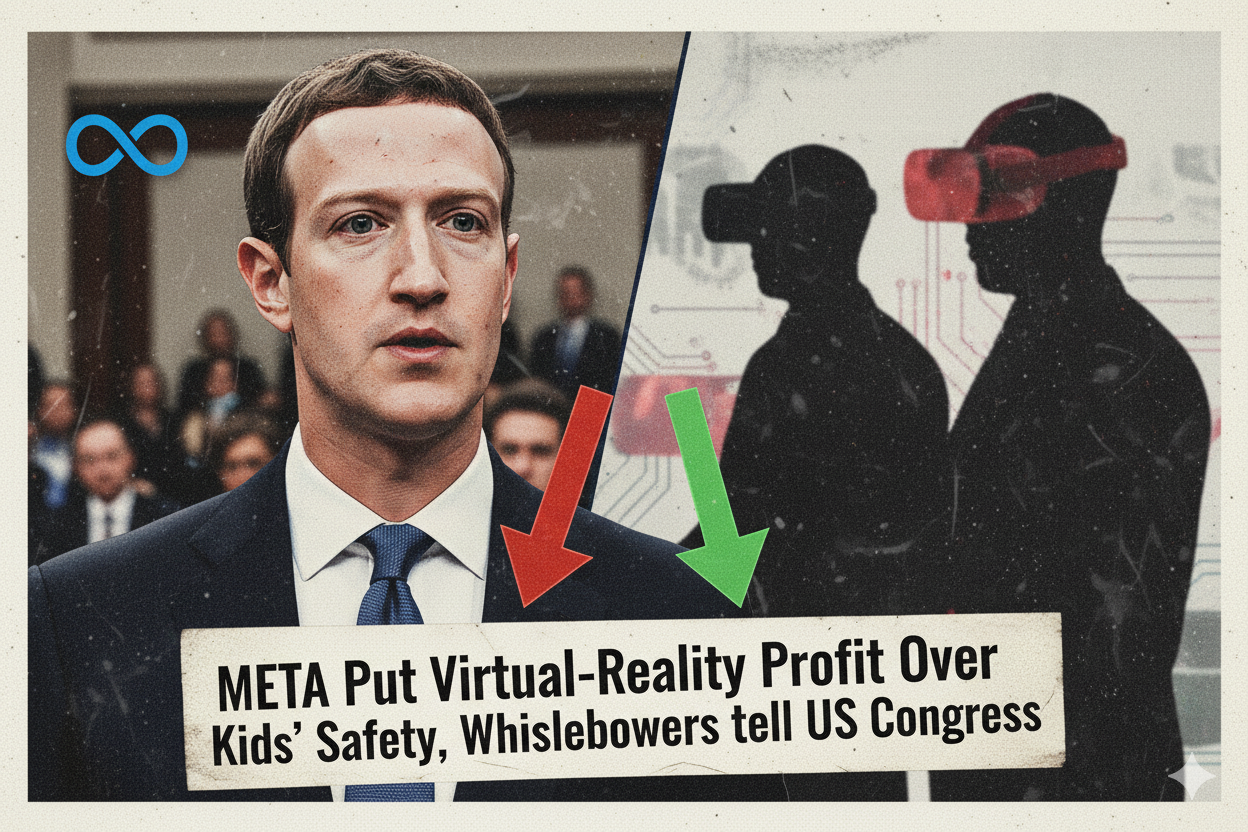
Whistleblowers Tell Congress Meta Put Virtual-Reality Profit Over Kids’ Safety
Former Meta researchers told Congress the company prioritized virtual‑reality profit and engagement over child safety, alleging suppression of harmful research, orders to delete abuse evidence, and blocking studies on age verification — prompting bipartisan calls for regulation.
- Whistleblowers Cayce Savage and Jason Sattizahn testified that Meta shut down or sanitized research into VR harms and sometimes directed staff to avoid or delete incriminating data (Fox News, Lex18).
- Allegations include orders to erase evidence of minors being solicited for sex, legal edits to research, and blocked studies on age verification and youth safety (NBC Montana, Transparency Coalition).
- Meta denies systematic suppression, saying it has approved hundreds of VR safety studies and calls the whistleblowers’ narrative selective (Fox News).
- Regulators are involved: whistleblower disclosures were filed with the SEC and FTC, raising the possibility of further investigations and legal action (NBC Montana).
Suppression of harmful research
Whistleblowers told a Senate Judiciary Subcommittee that internal projects on age verification, grooming risks, and sexual abuse were repeatedly shut down or redirected. They said researchers were discouraged from collecting data that could show minors entering adult VR spaces or being targeted by predators. These claims were detailed in multiple public reports and testimony (Lex18, Transparency Coalition).
“Research topics and methods were shaped to minimize the chance of producing damaging results,” whistleblowers testified about what they described as “funnel manipulation.”
Direct orders to destroy or withhold data
A central allegation is that employees were sometimes instructed to avoid retaining data or to sanitize findings when results could create legal or regulatory exposure. Sattizahn told senators he was explicitly ordered to delete evidence showing children in Germany were being solicited for sex on Meta’s VR platforms — an allegation that raises potential legal and criminal-handling questions (Lex18).
Whistleblowers described legal teams monitoring research and sometimes directing edits or deletions of reports. Critics used terms like “sanitizing” and “withholding” to describe these practices, arguing they limited transparency and accountability (Transparency Coalition, NBC Montana).
Allegations of routine victimization in VR spaces
Whistleblowers described patterns of harassment and abuse in Meta’s VR environments, citing internal surveys with high rates of harm within short periods of use. Sattizahn referenced studies where nearly half of users reported some form of harm within three weeks, with children and women identified as especially vulnerable (TurnTo10, Lex18).
- Reported harms: grooming, sexual harassment, unwanted sexual contact in virtual spaces, and exposure to inappropriate content.
- Researchers’ view: these were not isolated incidents but signs of broader safety shortfalls that leadership failed to address.
Bypassing age restrictions and company policies
Whistleblowers said children under 13 routinely bypassed age checks and accessed Meta’s VR spaces despite explicit company rules. Internal documents were said to show weak age verification, with legal staff allegedly advising researchers against collecting proof of these weaknesses—advice critics argue was meant to limit legal liability (Transparency Coalition).
Meta’s response and contesting the record
Meta pushed back, stating it has approved roughly 180 VR-related studies on youth safety since 2022 and emphasizing investments in safety tools and research. The company described the whistleblower materials as “selectively leaked internal documents” and said the testimony painted a misleading picture of its practices (Fox News).
Meta’s public stance: the company says it does not tolerate sexual abuse or exploitation and works with law enforcement when criminal activity is reported, while continuing to refine VR safety features.
Regulatory filings and potential legal fallout
Whistleblowers filed disclosures with the Securities and Exchange Commission and the Federal Trade Commission, which could spur investigations or enforcement actions. Senators from both parties demanded answers and signaled interest in tougher regulation, noting similarities to earlier scrutiny of Meta platforms and youth harms (NBC Montana, Transparency Coalition).
Context: Why this matters now
Virtual reality is increasingly common among young people. If platforms fail to protect minors, risks include emotional harm, sexual exploitation, and exposure to illegal conduct. The whistleblowers’ testimony raises concerns that growth and engagement goals may have been prioritized over youth safety as companies roll out VR offerings such as Horizon Worlds.
Implications for the Imperial Valley
Economic impact: Potential federal regulation or fines could raise compliance costs for tech firms, affecting hiring and investment in VR development locally.
Political consequences: Bipartisan concern in Washington may push local leaders to press for clearer protections; county officials and school districts might seek guidance on monitoring youth VR use.
Social effects: Families may demand information about parental controls and reporting; schools and community groups could organize workshops on VR safety.
Practical steps for parents: check device age settings, enable parental controls, supervise VR use, and report concerning interactions to platform support and law enforcement.
Resources and next steps for residents
Residents should follow congressional developments and consult national child-safety organizations for guidance. Local health and education agencies may offer parenting resources. Any FTC or SEC actions and subsequent public reports could clarify the risks and required platform safeguards.
Reporting and sources
This article draws from whistleblower testimony, regulatory disclosures, and reporting across multiple outlets including: Fox News; Lex18; NBC Montana; TurnTo10; and Transparency Coalition. The whistleblowers’ disclosures to federal regulators were also cited in public reporting (NBC Montana).
What we will follow next
Ongoing coverage will track regulatory actions, additional testimony, Meta’s responses, and local resources in the Imperial Valley for families, schools, and community groups concerned about VR child safety.