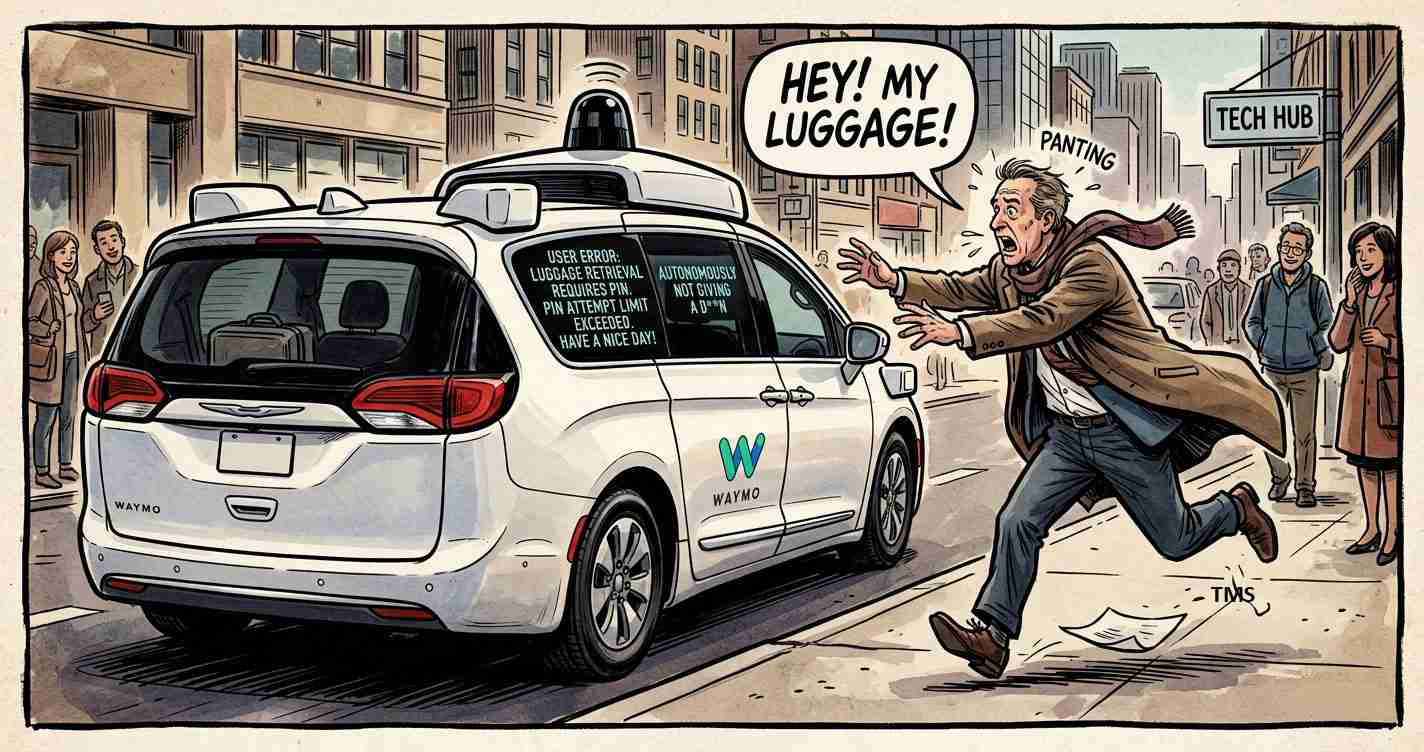
Waymo robotaxi luggage incident at SJC leaves rider stranded and sparks new questions about driverless car policies
Di Jin’s first Waymo robotaxi ride ended with the vehicle driving away with his suitcase at San José Mineta International Airport, prompting scrutiny of trunk behavior, Waymo’s lost-and-found rules and how driverless services support travelers at trip endpoints.
Key takeaways
- Suitcase left behind: Rider Di Jin says he exited at SJC, pressed the trunk release and the Waymo drove off with his luggage still inside.
- Support response: Waymo told Jin the vehicle was en route to a depot and later said the luggage was secured; shipping costs were initially disputed and later covered.
- Policy limits: Waymo’s help pages state trunks auto-open only after the trip ends and its lost-and-found disclaims guaranteed recovery or reimbursement.
- Broader concern: The incident joins other AV “edge-case” problems and is part of ongoing regulator and public scrutiny.
What happened at SJC
Di Jin booked a Waymo from Sunnyvale to San José Mineta International Airport. He reports the ride felt normal, but when the vehicle reached his terminal stop he stepped out and pressed the physical trunk release above the license plate. The hatch did not open.
By the time Jin realized his suitcase remained inside, the driverless vehicle had begun moving on its own. He could not flag or stop the car and was left at the curb without a change of clothes or his work notes. He reported the incident through the app and then by phone.
Waymo — through in-app support — told him the vehicle was already heading to a depot and could not be turned around. Waymo later emailed that the luggage had been secured at a company depot. When contacted, Waymo declined to comment on the specific incident to reporters.
What Waymo tells riders
Waymo’s public help pages explain multiple methods to open the trunk: press the physical release above the plate or tap “Open trunk” in the app. The company notes that the trunk will automatically open only after the vehicle has fully stopped and the trip is marked ended — meaning exiting prematurely can prevent access.
Waymo’s lost-and-found policy states support teams will attempt to reunite riders with items but cannot guarantee recovery, immediate delivery, condition or reimbursement for things left behind. Those limits reflect both technical behaviors and legal positioning and have drawn attention after Jin’s experience.
See Waymo and Waymo support for the company’s public instructions and policies.
How common are problems with driverless cars?
Autonomous vehicle operations remain limited and often geo-fenced, and researchers characterize unusual incidents as “edge cases.” Analyses and reporting show that while AV firms log millions of miles, rare or unusual failures persist:
- Reports of passengers becoming trapped in Waymo vehicles after rides ended, sometimes requiring outside help to exit; doors or controls sometimes do not behave as expected (APM Research Lab).
- Cases where robotaxis impeded emergency responders or blocked intersections, creating delays until staff or authorities intervened (LegalReader).
- High-profile safety incidents at other companies have triggered NHTSA reviews and operational suspensions, underscoring broader regulatory scrutiny (CBS News, InsideEVs, NHTSA).
Passenger perspective: a new kind of travel risk
For airport travelers, the incident highlights a vulnerability: unlike human-driven ride-hail trips where a driver can be waved down, interactions with robotaxis depend on software, sensors and remote support. Jin told reporters:
“When you travel for work, your suitcase is not a small thing — it’s your job and your plans.”
Jin said Waymo initially offered two free rides or to ship the luggage but would not cover courier fees; after pushback the company agreed to pay shipping. That sequence — luggage secured but retrieval costs contested — raises questions about who pays when there is no human driver to share immediate responsibility.
Policy, liability and customer support
Waymo’s public terms set clear limits: trunk behavior depends on trip-state, lost-and-found teams will try to help but do not guarantee results, and the company disclaims responsibility for item value. Consumer advocates argue such limits may be insufficient when riders follow instructions and still lose property.
Regulatory attention: NHTSA and state agencies are reviewing AV incidents and pressing operators to coordinate with local responders on manual overrides and training. Those inquiries may influence future requirements for luggage handling, onboarding, and in-app safeguards.
Implications for The Imperial Valley, California
- Economic: Though not yet a deployment hub, Valley travelers to Bay Area airports could face delays if luggage is misrouted; local businesses (hotels, shuttles, couriers) could see demand shifts.
- Political: Local officials may press for clearer rules or consumer protections before wider AV deployment in Southern California.
- Social: Stories like this can erode trust and slow adoption among travelers who prefer human contact at trip endpoints.
- Practical advice: Verify the trunk is open before stepping away, use the app’s trunk-open feature while inside the vehicle if possible, photograph vehicle and trip details, and keep critical items on your person.
Reporting notes and sources
This report is based on an account published by CyberGuy and Waymo’s public help and lost-and-found policies. Broader context cites reporting and analyses from APM Research Lab, CBS News, LegalReader, InsideEVs, and the NHTSA. For Waymo’s own pages see Waymo and Waymo support.
Sources: CyberGuy; Waymo (help pages); Waymo support; APM Research Lab; CBS News; LegalReader; InsideEVs; NHTSA.