Wave of West Virginia party switching reshapes politics ahead of closed May primary
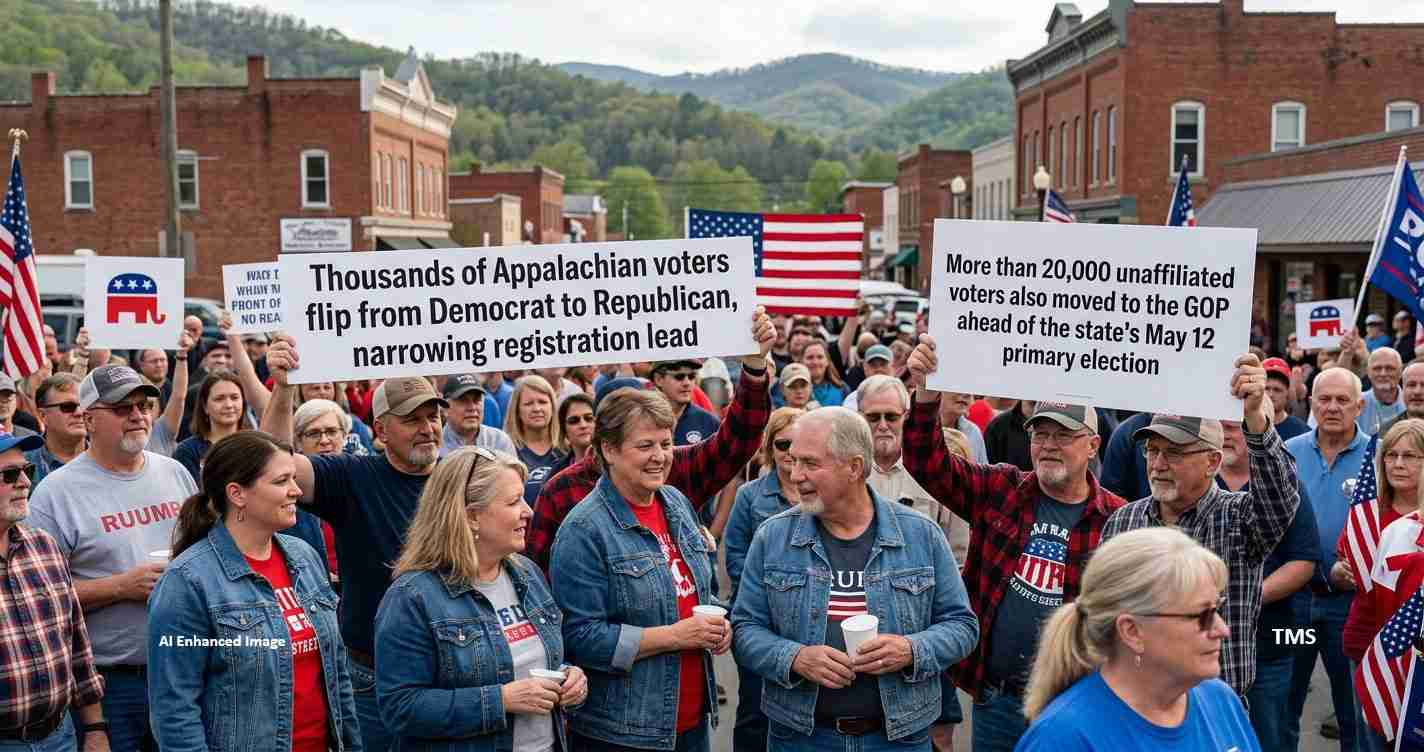
Between Jan. 31 and Apr. 23, 2024, 68,235 West Virginia voters changed party affiliation ahead of the May 12 closed primary, producing a net Republican gain and wide voter reshuffling across the state, and prompting intense scrutiny of turnout dynamics.
Key takeaways
- 68,235 voters changed affiliation from Jan. 31–Apr. 23, 2024, per West Virginia Secretary of State Kris Warner.
- Largest flows: 16,910 Democrats → Republican; 20,003 unaffiliated → Republican.
- Net effect: Republican registration rose while many voters also moved to unaffiliated; Democrats and independents together still outnumber Republicans.
Key information
Timeframe and totals: From Jan. 31–Apr. 23, 2024, 68,235 voters updated party registration, according to data released by West Virginia Secretary of State Kris Warner.
Largest shifts:
- 16,910 Democrats → Republican
- 20,003 Unaffiliated → Republican
Other notable moves:
- 12,299 Democrats → Unaffiliated
- 7,559 Republicans → Unaffiliated
- 5,211 Unaffiliated → Democrat
- 2,399 Republican → Democrat
Registered totals as of Apr. 23, 2024: 519,756 Republicans; 327,089 Democrats; 301,933 independents — Democrats and independents together total about 629,022, outnumbering Republicans.
Primary eligibility: More than 1.19 million West Virginians were eligible to vote in the primary once rolls were finalized after the late-April affiliation deadline.
What the data shows
The secretary of state’s dataset documents an intense period of party switching in the run-up to the May 12 primary. In raw numbers, 68,235 registration changes occurred between Jan. 31 and Apr. 23, with the two largest single flows — Democrat to Republican and unaffiliated to Republican — accounting for more than half of all switches.
At the same time, substantial movement toward no party preference occurred: 12,299 Democrats and 7,559 Republicans left party labels to become unaffiliated. Smaller flows moved toward the Democratic Party (5,211 unaffiliated and 2,399 Republicans registering as Democrats).
Takeaway: The numbers show a net Republican gain and a broader reshuffling of voter allegiance statewide.
Why party switching spiked
Party leaders and state officials attribute the surge largely to West Virginia’s closed primary format, where only voters registered with a party may vote in that party’s primary. That creates an incentive for voters to switch registration to participate in competitive contests.
“This huge uptick in the last couple of months is certainly tied to the primary being closed,” Del. Josh Holstein (R), state Republican Party chairman, told the Herald-Dispatch. “So I think it’s why a lot of those folks said, ‘Hey, I’ll just register Republican.’”
Del. Mike Pushkin (D), state Democratic Party chairman, said: “The data shows a broad change across the state, not a one-way shift.”
Timing supports these explanations: many registration changes clustered close to the affiliation deadline in late April. Reporting and official briefings present slightly different finalization dates (April 21 or April 28 in some accounts), but state officials confirmed early voting and cutoffs were clustered in late April. See reporting and briefings at video briefing 1 and video briefing 2.
What this means for the WV 2024 primary election
The closed primary format raises stakes for party registration numbers. Competitive Republican primaries drew particular interest, and the uptick in new Republican registrations could influence which candidates prevail in May.
Even with the GOP surge, Democrats and independents combined still outnumber registered Republicans. Long-term party strength therefore depends on turnout and whether newly registered Republicans remain with the party after the primary. Primary contests with narrow margins can be decided by a small cohort of engaged voters; past West Virginia primaries have seen turnout well under 50 percent — in some cycles just over 30 percent — amplifying the effect of last-minute registration moves.
Local campaigns and party leaders are watching registration lists closely: Republicans see a larger pool for contested primaries, while Democrats face the challenge of departures to unaffiliated status.
Regional and national implications
West Virginia’s political shifts matter beyond state lines. Changes in the electorate can produce different primary winners who shape the state’s voice in Congress on energy, health care and federal funding. For strategists, the pattern tests whether registration gains tied to closed primaries signify lasting realignment or temporary tactical moves by voters.
Sources and verification
Numerical totals and breakdowns come from data released by West Virginia Secretary of State Kris Warner covering Jan. 31–Apr. 23, 2024. Party leaders’ comments were reported to the Herald-Dispatch and summarized in public briefings and local reporting. Related video briefings and local reporting are available at video briefing 1 and video briefing 2.
Implications for the Imperial Valley, California
How a West Virginia registration surge matters to Imperial Valley readers may not be immediately obvious, but there are practical lessons:
- Political organizing & turnout strategy: Watch how procedural rules — deadlines and primary formats — change who decides nominations. Even under California’s top-two/open systems, local groups can learn from West Virginia about late registration mobilization.
- Federal policy effects: Shifts in West Virginia’s delegation can influence national decisions on energy, water funding, agricultural assistance and rural infrastructure that affect Imperial Valley communities.
- Voter education: The West Virginia case shows voters use registration strategically. Local civic groups should emphasize clear outreach on deadlines and how primaries function.
- Local partisan dynamics: Rapid affiliation shifts are possible; leaders should monitor registration trends and remain flexible.
- Practical application: Federal and state policy changes after primaries can affect funding for water projects, farm subsidies, health programs and emergency response in the Valley.
Reporting sources: West Virginia Secretary of State Kris Warner data release; statements to the Herald-Dispatch by Del. Josh Holstein and Del. Mike Pushkin; briefings and reporting at video briefing 1 and video briefing 2.